
Championships Are Won in the Garage
Display None Text
What Formula 1 can teach us about building high-performance software architecture that remains fast, reliable, and efficient when the pressure is on.

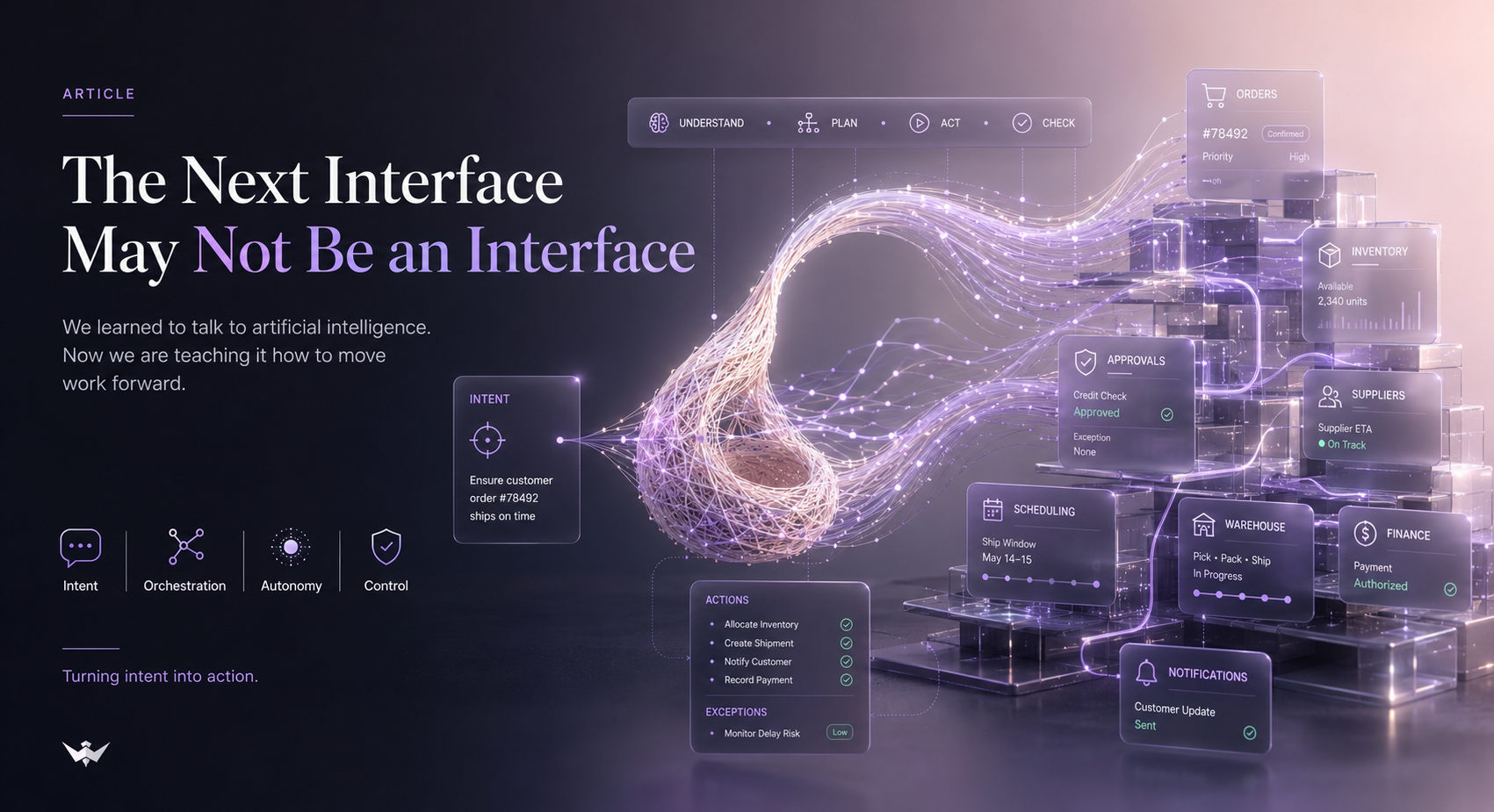
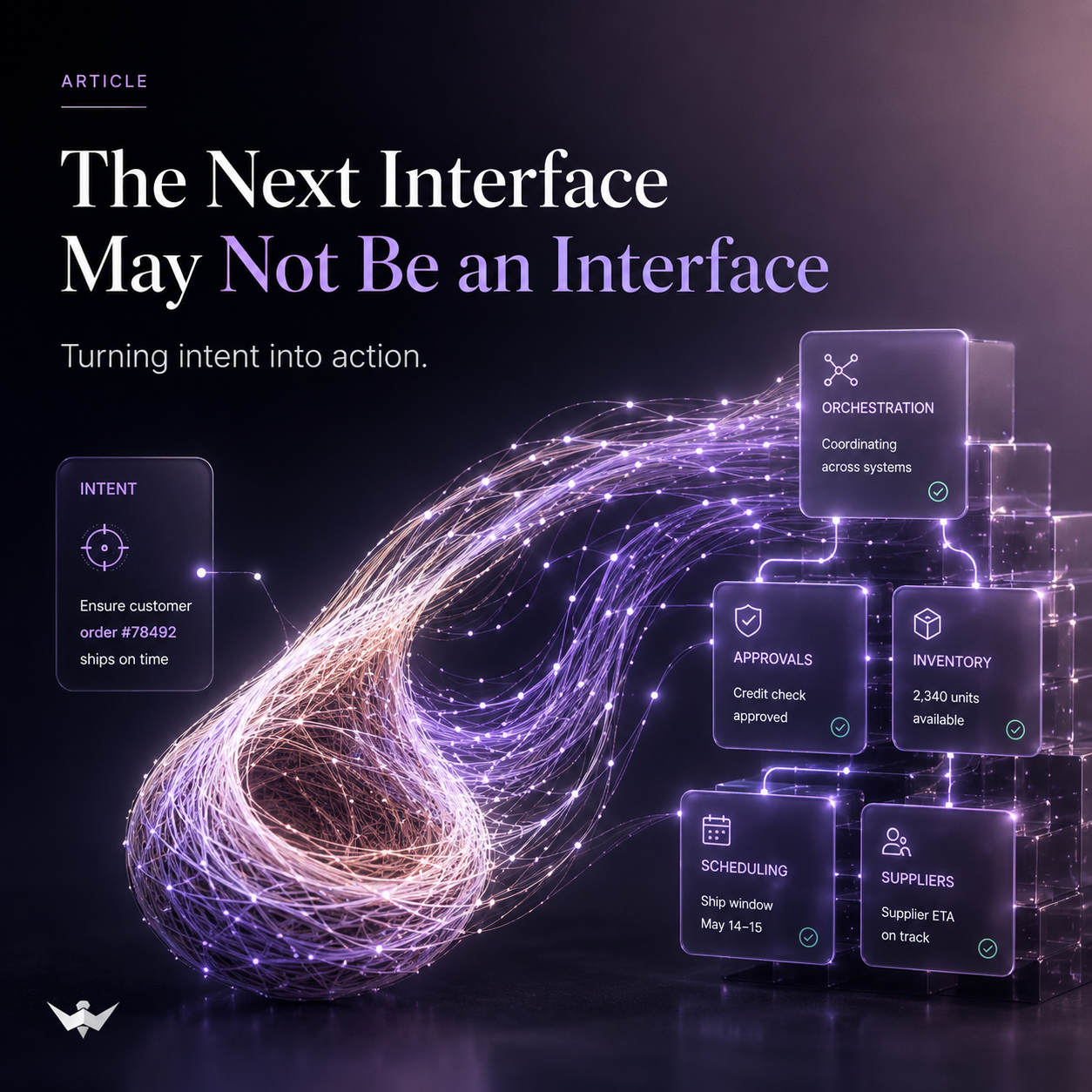
We learned to talk to artificial intelligence. Now we are teaching it how to move work forward.



At 8:17 on a Monday morning, an operations manager receives an email from a supplier.
A shipment has been delayed.
The message is only three sentences long, but its consequences stretch across the business. Several customer orders depend on that delivery. Inventory may cover some of them, but not all. Another supplier might have replacement stock, although at a higher price.
The manager opens an AI chatbot and asks:
Which orders will be affected?
Within seconds, the chatbot identifies the relevant orders, summarizes the inventory position, and recommends contacting an alternative supplier.
It is an impressive answer.
Then the actual work begins.
The manager opens the inventory system, checks production schedules, searches recent emails, contacts two suppliers, updates an internal record, alerts the warehouse team, and requests approval for the replacement order.
The AI understood the situation.
The human still had to carry the work across six systems and a dozen small decisions.
That gap-between understanding a problem and completing the work-is where agentic AI for business begins.
Agentic AI moves beyond systems that simply generate responses. An agentic system can interpret an objective, gather information, select approved tools, take actions, evaluate the result, and involve a person when judgment is required.
The goal is not to make software appear more human.
The goal is to make it more useful.
We have started calling too many things AI agents.
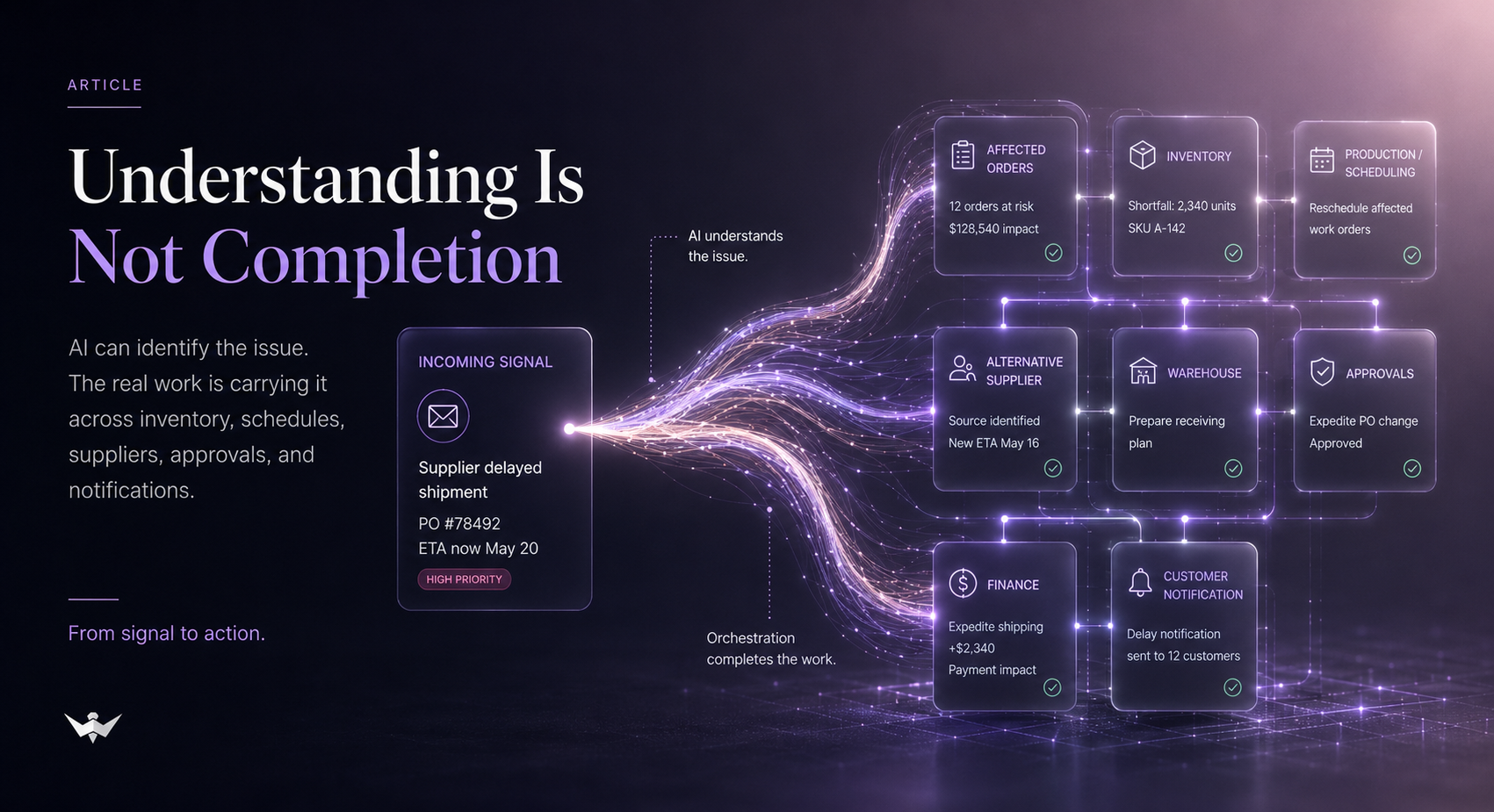
A chatbot responds to a request.
A copilot helps a person complete a task.
A workflow automation follows a predefined sequence.
An AI agent works toward an outcome.
Consider a customer who wants to reschedule an appointment.
A chatbot can explain the cancellation policy.
A copilot can draft a response for the service representative.
A workflow automation can send a confirmation once an employee updates the booking.
An AI agent can interpret the request, check available times, apply scheduling rules, update the appointment, and send the confirmation. If the request falls outside policy, it can pause and ask an employee to review it.
A multi-agent system divides the work among several specialized agents. One may interpret the request, another may check policy, and another may coordinate the response.
But greater autonomy is not automatically better.
Some workflows should remain human-led. Some should be completely automated. Many will work best somewhere in between.
The right question is not:
How autonomous can this system become?
It is:
How much autonomy can this work safely support?
The word agent makes the technology sound almost alive.
That can distract from what actually makes it valuable.
An agent does not become useful because it has a name, an avatar, or a conversational tone. It becomes useful because the system around it has been designed well.
A dependable agent needs:
Return to the delayed-shipment example.
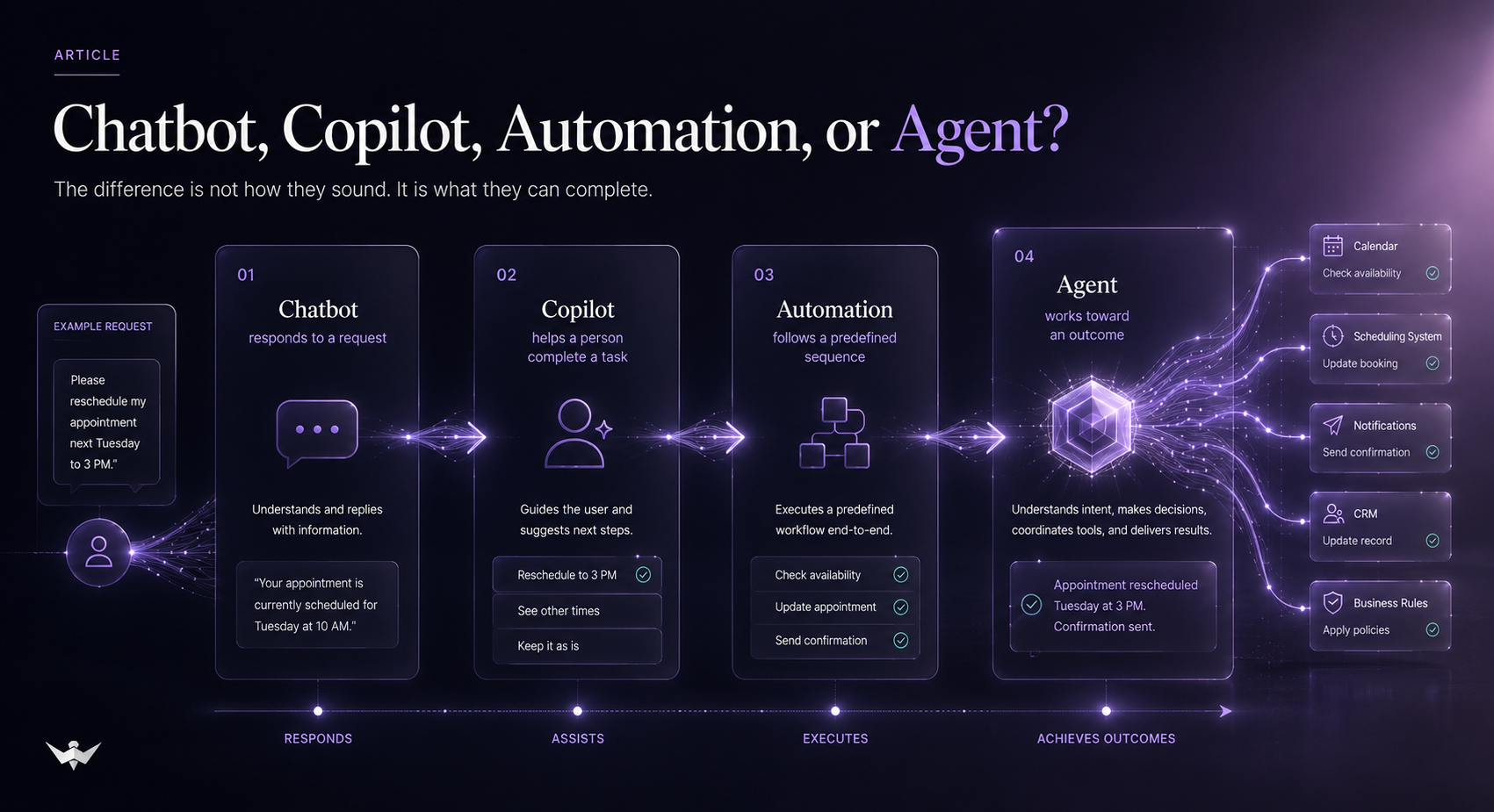
The agent may retrieve purchase orders, compare delivery commitments, inspect inventory, read supplier emails, identify affected customers, and determine whether the financial impact exceeds an approval threshold.
For a routine delay, it may update the expected date and notify the team.
For a serious shortage, it may locate an alternative supplier and prepare a recommendation.
For a high-value or uncertain decision, it should stop and involve a person.
This is what makes the system agentic:
Understand. Plan. Act. Check. Continue-or escalate.
The model provides reasoning.
The surrounding system provides reliability.
The strongest agentic use cases are rarely dramatic.
They usually live in the ordinary spaces between systems.
A person receives information in one place, checks context in another, makes a judgment, updates a third system, and asks someone else for approval.
This pattern appears everywhere:
These workflows are strong candidates because they have a clear outcome but not always a fixed path.
The work requires interpretation. It often includes documents, emails, and changing circumstances. Employees must constantly decide what to do next.
That is where AI agents for business can help.
Not by replacing the person who understands the operation, but by reducing the administrative distance between information and action.
The Deko Automotive example
This became clear in our work around Deko Automotive’s operational AI strategy.
The opportunity was not to place a chatbot over the company’s systems and call the business AI-enabled.
Deko had more than 25 years of information across inventory, logistics, delivery schedules, supplier communications, and daily operations. The challenge was that the context required to make one decision was distributed across many places.
A useful AI strategy had to answer practical questions:
That is the difference between adding an AI feature and building an operational AI capability.
One produces answers.
The other helps work move.
Not every workflow should become agentic.
Some work does not need interpretation. It needs consistency.
A database backup should happen the same way every time.
A payroll calculation should not improvise.
A known file transformation does not require autonomous reasoning.
For stable, rule-based processes, traditional automation is often faster, cheaper, easier to test, and easier to trust.
The strongest systems usually combine both approaches.
The agent interprets an uncertain situation. Deterministic software performs the sensitive action.
An agent may determine that a customer appears eligible for a refund. A conventional service then verifies the rules and processes the transaction.
The agent handles ambiguity.
The software handles certainty.
That combination is less theatrical than full autonomy.
It is also far more practical.
AI demonstrations usually show the ideal path.
Production systems live in the exceptions.
The customer record cannot be found.
Two databases disagree.
An API stops responding.
The requested action succeeds, but the confirmation never arrives.
The agent is uncertain, yet continues anyway.
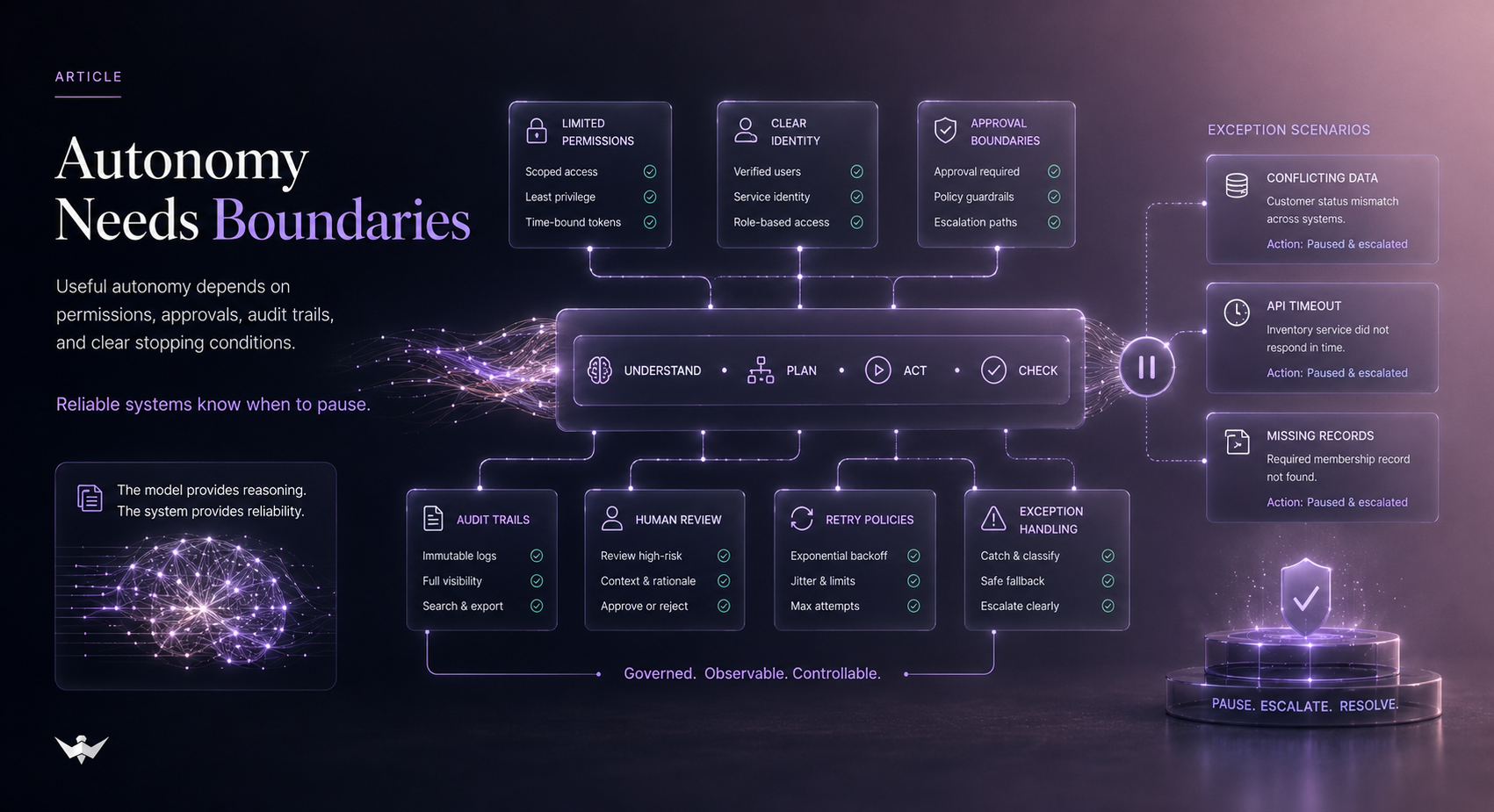
A real agentic system needs stopping conditions, retry policies, duplicate-action prevention, fallbacks, timeouts, manual takeover, and a record of what happened.
It must know when to proceed.
More importantly, it must know when not to.
That is why human approval is not a weakness. It is part of the architecture.
Routine, low-risk work may continue automatically. But when financial value rises, information conflicts, confidence falls, or an action cannot be reversed, the system should pause.
It should then explain:
The goal is not to remove people from every decision.
It is to reserve their attention for the decisions where judgment matters most.
The moment an AI agent gains access to business tools, security becomes part of the product.
A trustworthy enterprise agent needs four basic controls:
Limited permissions
The agent should receive only the access required for its role.
Clear identity
The system must know who initiated the request and what actions may be taken on that person’s behalf.
Approval boundaries
Sensitive, high-value, or irreversible actions should require confirmation.
Audit trails
Every important action should leave a record: what information was retrieved, which tool was used, what decision was made, who approved it, and whether it succeeded.
Without these controls, autonomy becomes exposure.
With them, it becomes a useful business capability.
A business does not need to begin with a network of agents coordinating an entire department.
The best first workflow is narrow, measurable, and already slightly painful.
Look for a process where employees repeatedly gather information from several systems, interpret what it means, choose a path, and ask for approval before finishing the work.
Then ask:
A good first agent might review delayed orders, prepare account briefs, investigate support requests, reconcile documents, or coordinate routine supplier follow-ups.
It does not need to transform the entire company.
It needs to complete one meaningful piece of work reliably.
Then it needs to do it again.
Trust is not created in the first demonstration.
It is built through repeated, visible performance.
For decades, software has required people to understand its structure.
We learn which application contains which information. We move from inboxes to spreadsheets, from spreadsheets to dashboards, and from dashboards to approval forms.
We translate one business objective into dozens of small interactions.
Agentic systems begin to reverse that relationship.
A person describes the outcome.
The system coordinates the information, tools, rules, and approvals needed to move toward it.
There may still be dashboards, forms, and chat windows. But the interface becomes less important than the capability behind it.
At Wewer, we see AI agent development as a systems challenge.
The work is not in making a chatbot appear intelligent. It is in connecting data, defining tools, limiting permissions, designing approval points, handling exceptions, and measuring whether the system actually completes the job.
Because an AI agent is not valuable when it sounds intelligent.
It is valuable when the order is updated.
When the right person is notified.
When the exception is caught.
When the action can be traced.
When the work moves forward-and the business remains in control.
The next interface may still look like a conversation.
But behind that conversation will be something far more important:
A system capable of turning intent into action.

What Formula 1 can teach us about building high-performance software architecture that remains fast, reliable, and efficient when the pressure is on.
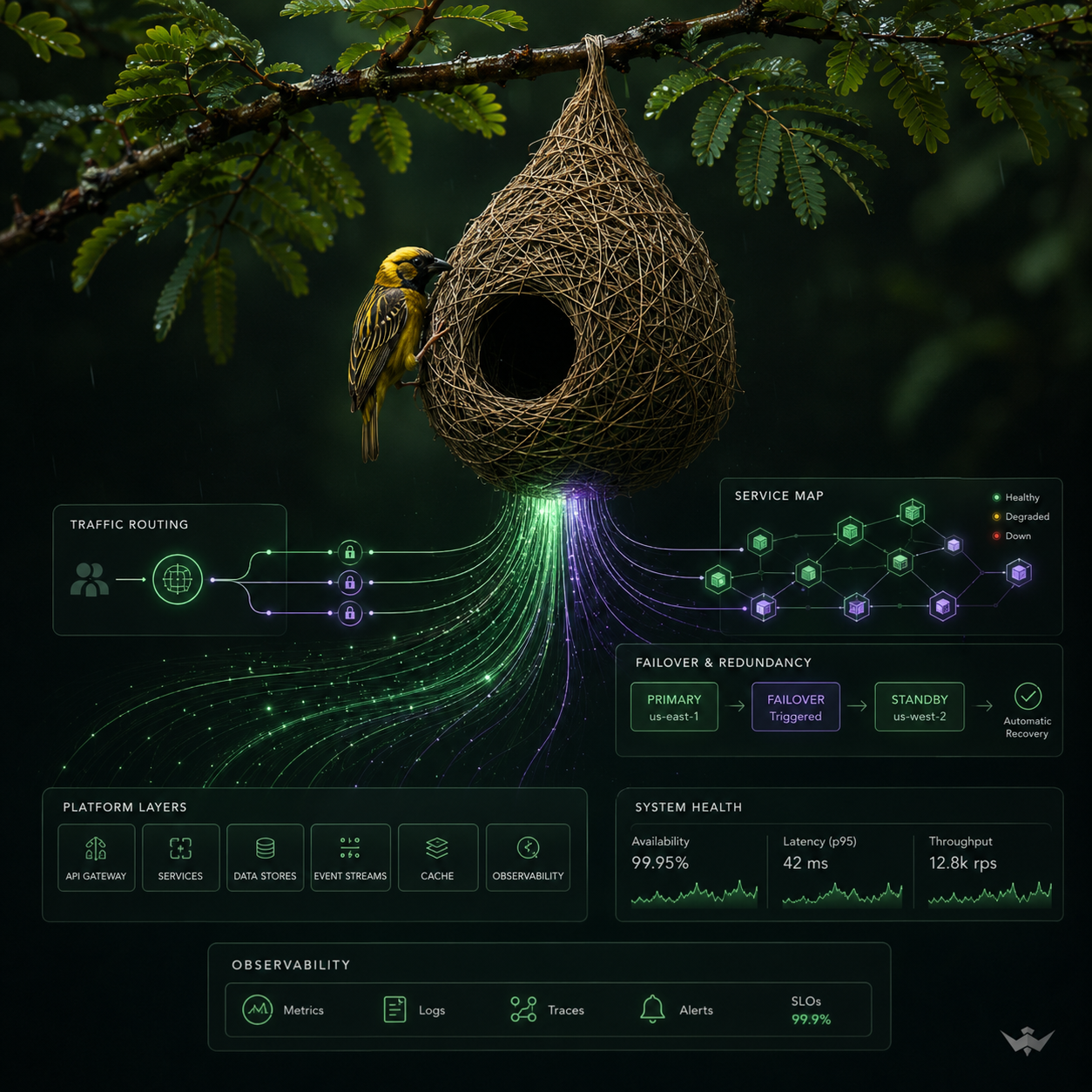
The strongest systems are rarely made from extraordinary parts. They become extraordinary through the way those parts are connected.

The real test of an AI system begins when the perfect prompt, curated data, and friendly audience disappear.
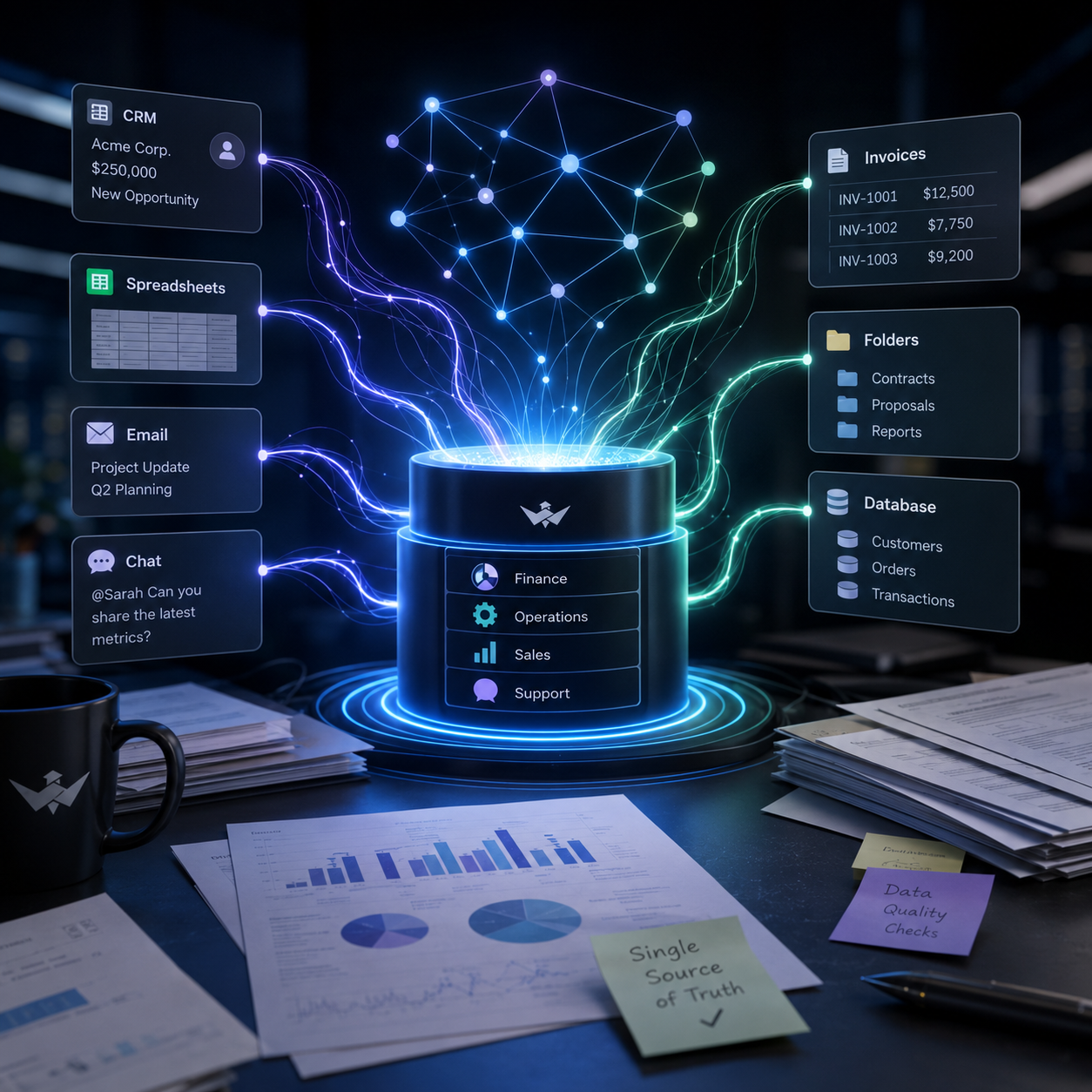
Before AI can understand your business, your business has to understand where its knowledge lives.
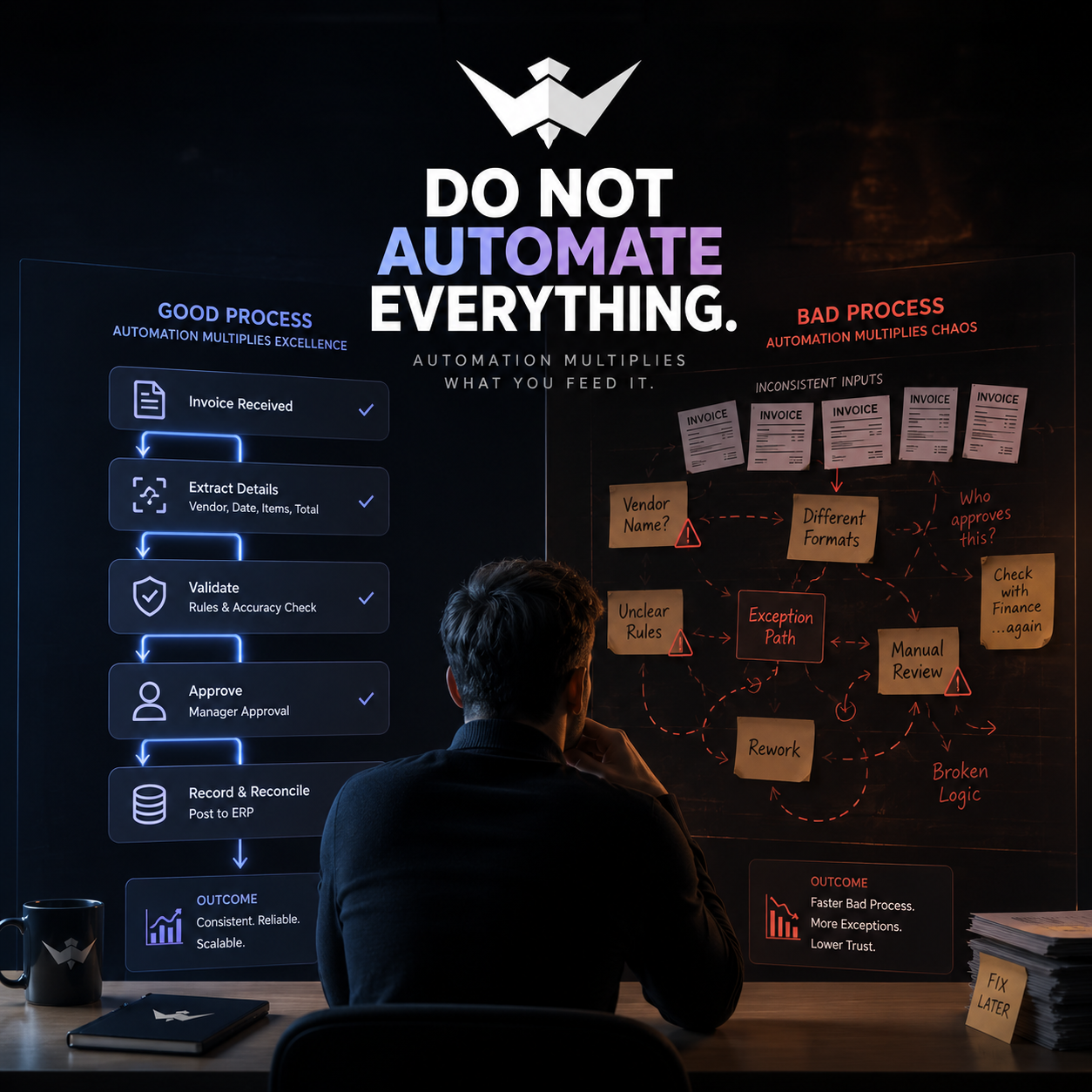
Automation is a multiplier. Before making a process faster, make sure it deserves to be multiplied.
We learned to talk to artificial intelligence. Now we are teaching it how to move work forward.
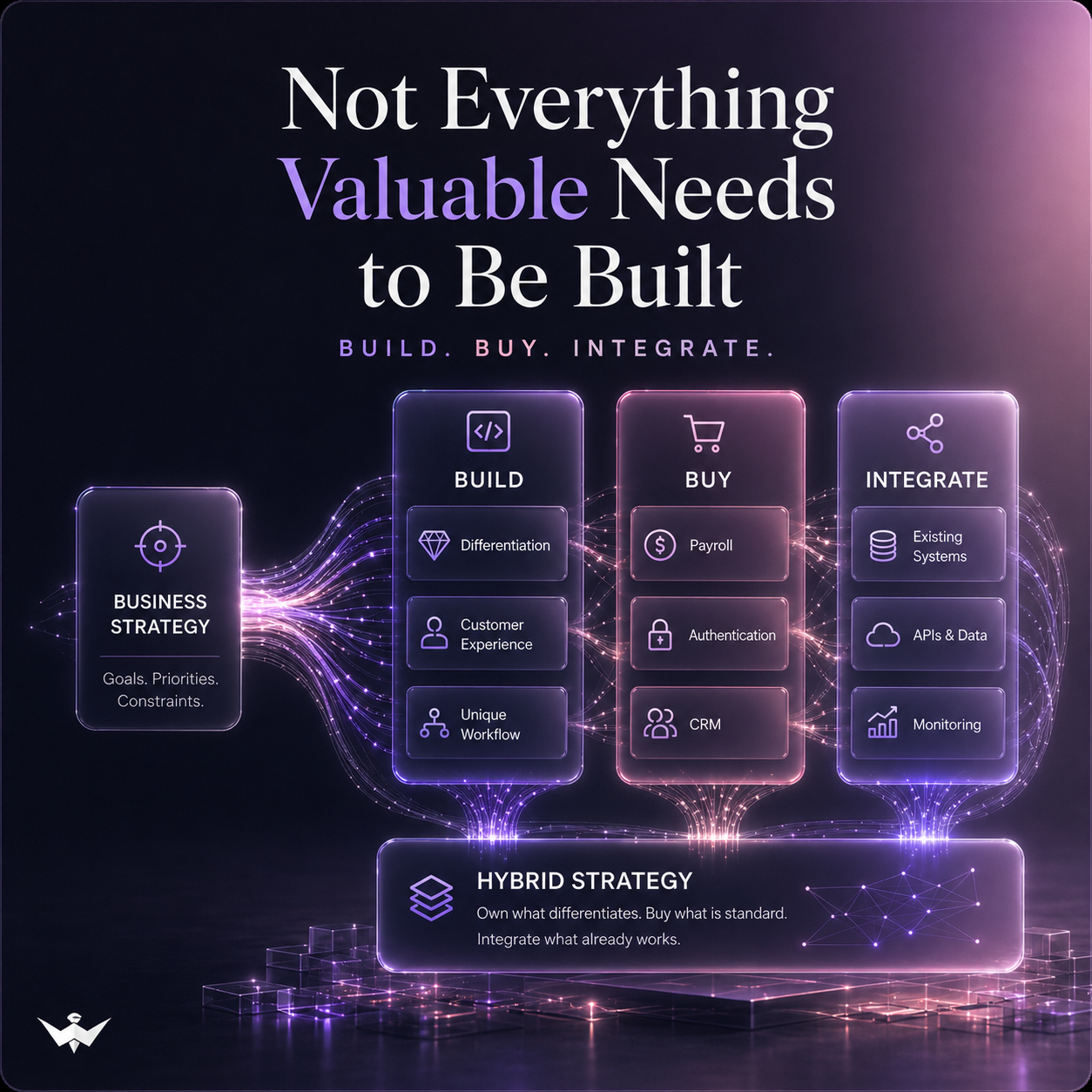
The smartest software strategy is not choosing between build and buy-it is knowing what your business should own, what it should borrow, and what it should connect.