

Championships Are Won in the Garage
Display None Text
What Formula 1 can teach us about building high-performance software architecture that remains fast, reliable, and efficient when the pressure is on.

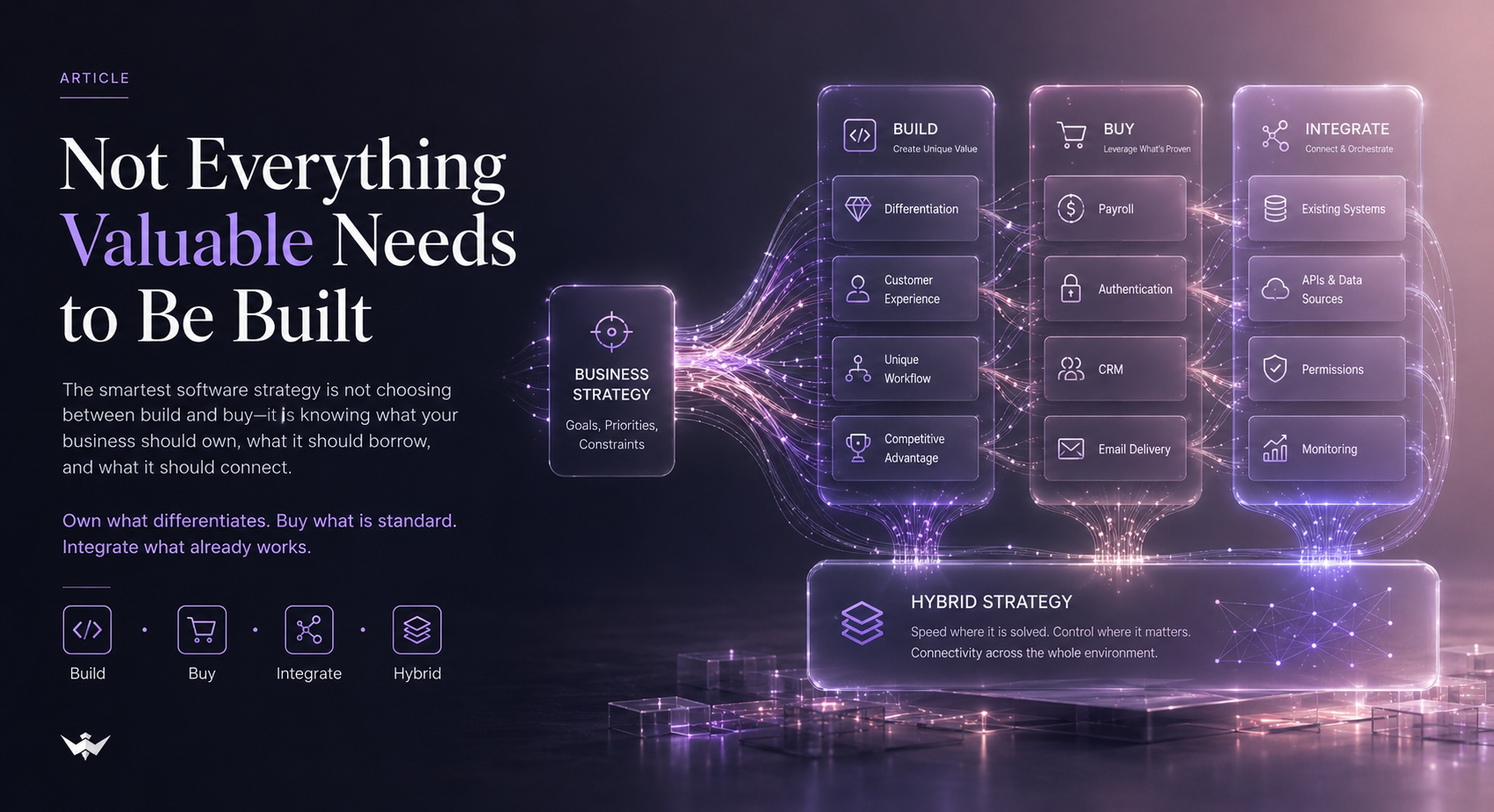
The smartest software strategy is not choosing between build and buy-it is knowing what your business should own, what it should borrow, and what it should connect.



A familiar debate happens inside growing companies.
One group wants to purchase an established platform. It is available now, has a long feature list, and appears cheaper than building something new.
Another group argues that the business is different. The workflows are too specific. The customer experience matters too much. The company should build its own system.
Both sides may be right.
The problem is that build vs buy software is usually presented as a binary decision when the real answer is often somewhere in between.
Most successful technology strategies combine four choices:
The objective is not to own the most software. It is to own the capabilities that matter.
Instead of asking, “Should we build or buy this?”, ask:
Which capabilities should we own, which should we purchase, and how should they work together?
That small change creates a much better conversation.
Payroll is important, but few companies gain a competitive advantage from creating their own payroll platform. Authentication, accounting, email delivery, cloud infrastructure, and basic customer relationship management are also largely standardized capabilities.
Buying them is often the sensible choice.
But the calculation changes when software directly shapes the reason customers choose the business.
A distinctive product experience, proprietary operating model, unusual planning workflow, or unique decision-making process may not fit comfortably inside an off-the-shelf platform. Forcing it into one can gradually make the business operate like the software rather than making the software support the business.
That is where custom development becomes more valuable.
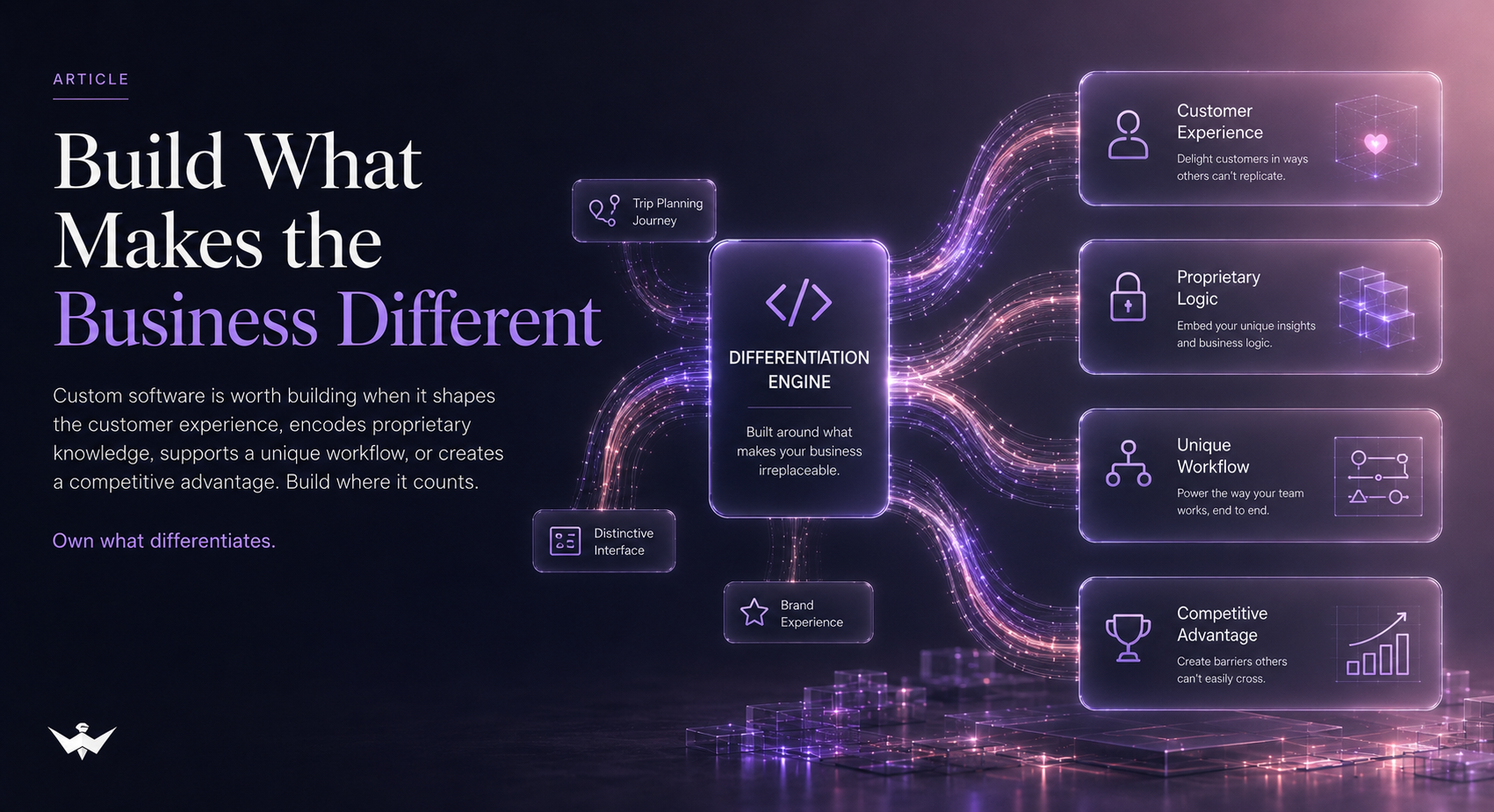
The strongest reason to build is not that an existing product lacks a few features.
It is that the capability represents something strategically important.
Custom software becomes more attractive when it:
TripReady, for example, was not simply another internal administrative system. Its discovery, comparison, and trip-planning journey was part of the product itself.
Using a generic travel platform may have accelerated the initial launch, but it could also have reduced the experience to the same patterns available to every competitor. A focused custom platform was justified because the interface and planning logic were central to the company’s differentiation.
The same principle applied differently to Karan Luthra Films. The public experience needed to feel cinematic and distinctive, but there was no reason to recreate analytics, search optimization, consent management, or other established services from scratch.
The brand experience was custom. The commodity capabilities were purchased.
That is the distinction businesses should look for.
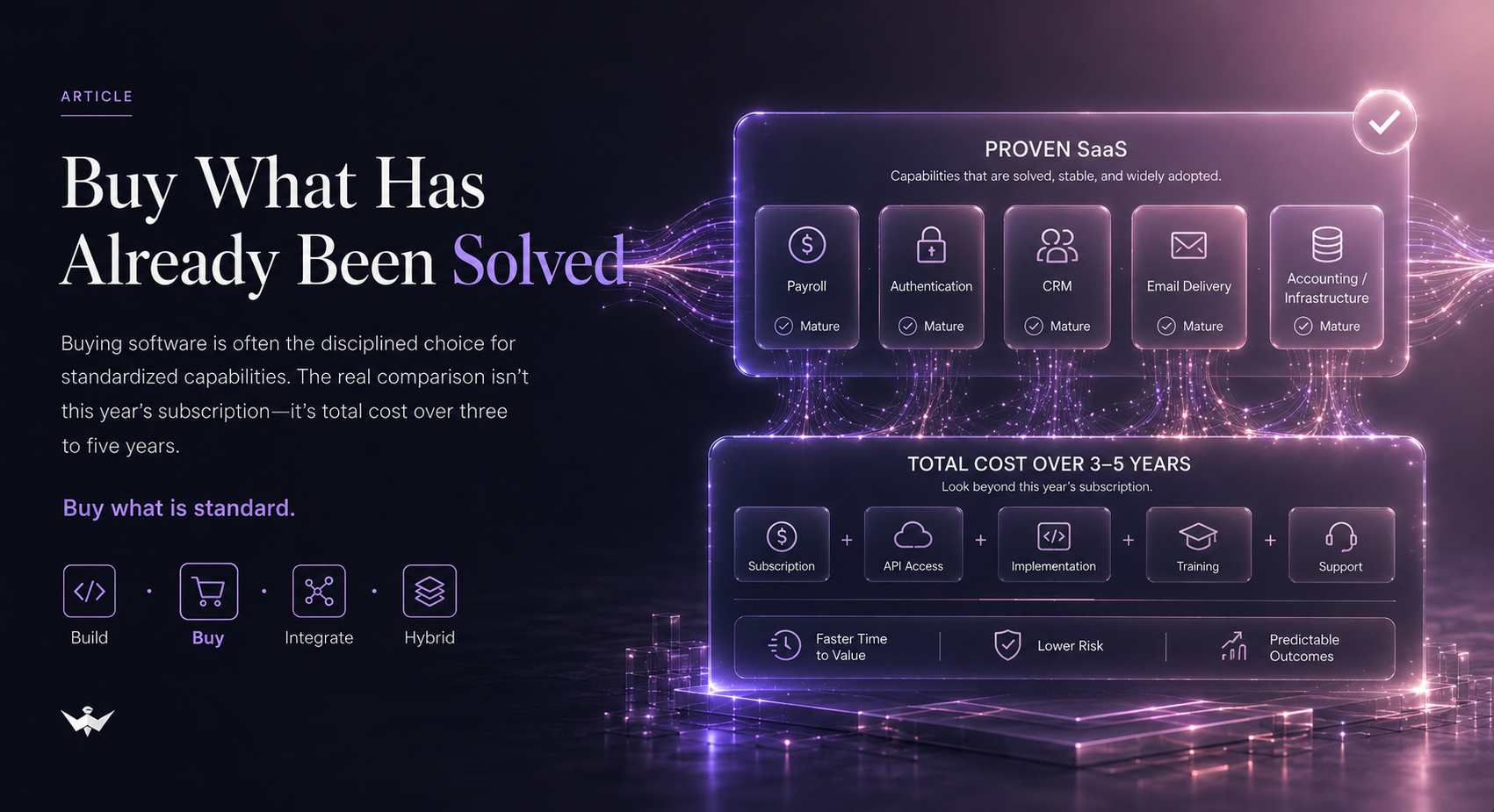
Buying software is not a compromise. In many cases, it is the more disciplined decision.
An established SaaS platform can provide years of product development, security work, documentation, integrations, and operational learning immediately. Rebuilding all of that internally can consume time without creating any meaningful business advantage.
But SaaS vs custom software should never be evaluated by looking at the subscription price alone.
A product that appears inexpensive can become costly once the organization adds:
Custom software has its own long-term costs: maintenance, security, testing, infrastructure, documentation, support, and ongoing product ownership.
The correct comparison is therefore not:
“What does it cost to purchase this year?”
It is:
“What will each option cost to operate, adapt, and eventually replace over the next three to five years?”
A good build vs buy decision framework examines total ownership, not just initial procurement.
Companies often describe their workflows as highly specialized.
Sometimes they are.
Sometimes they are simply the result of years of spreadsheets, manual approvals, informal exceptions, and undocumented decisions.
Before selecting software, the process itself should be examined.
Ask:
Building custom enterprise software around a poorly understood process does not solve the process. It preserves its problems in code.
Similarly, purchasing a platform before understanding the workflow can create expensive workarounds later.
Good technology consulting begins before either option is selected. It identifies which requirements are essential, which are preferences, and which exist only because “that is how we have always done it.”
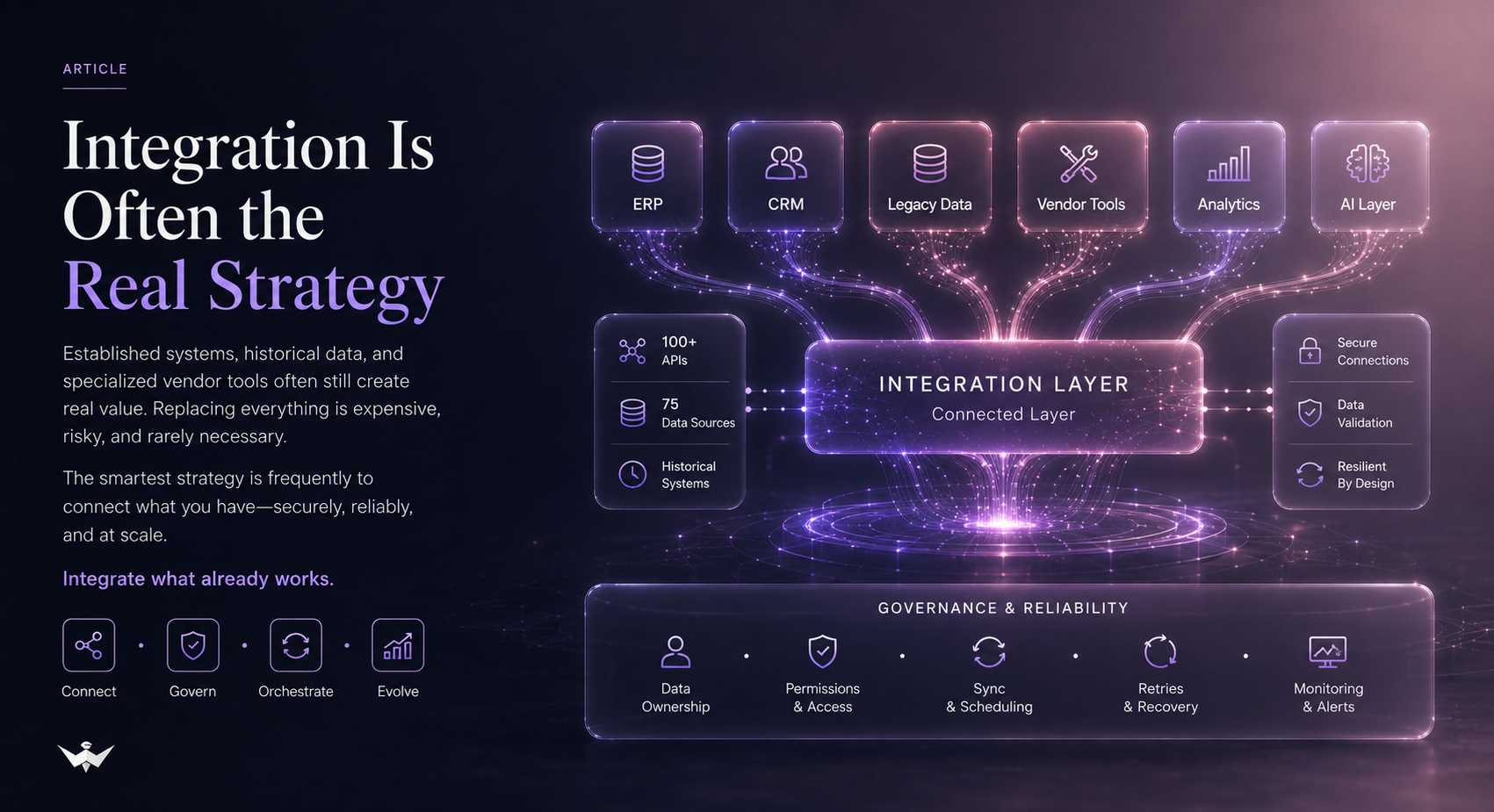
Many build-versus-buy discussions ignore a third option: keep what works and connect it properly.
This is especially important for established businesses.
A company may already have valuable operational systems, historical data, vendor relationships, and employee knowledge distributed across multiple platforms. Replacing everything with one new system can be costly, disruptive, and unnecessary.
MetaworldX faced a challenge involving more than 100 APIs and 75 data sources. Attempting to replace every connected system would not have simplified the environment. It would have created a much larger transformation project.
The more practical strategy was integration: allowing established systems to continue performing their specialized roles while creating a connected layer across them.
Deko Automotive required a similar hybrid approach. Decades of operational information already held enormous value. The opportunity was not to discard that history, but to connect it with modern analytics, automation, and AI capabilities.
This is where a strong software integration strategy can create more value than either a complete rebuild or another isolated SaaS purchase.
However, integration should never be treated as a few API calls between systems. It requires careful decisions about:
A platform can be excellent on its own and still be the wrong choice if it cannot participate reliably in the rest of the technology environment.
Every technology choice creates dependencies.
Custom software creates dependence on internal product ownership, technical talent, documentation, and maintenance.
Purchased software creates dependence on the vendor’s pricing, service quality, product roadmap, and commercial stability.
Vendor dependence is not automatically a problem. It becomes dangerous when the business loses practical alternatives.
Warning signs include:
Software vendor selection should therefore include an exit strategy before the contract is signed.
Who owns the data? Can it be exported in a usable format? What happens when the agreement ends? Can another platform replace it without rebuilding the entire operation?
A system is not truly flexible simply because it was quick to adopt.
The following questions help reveal which direction is most appropriate:
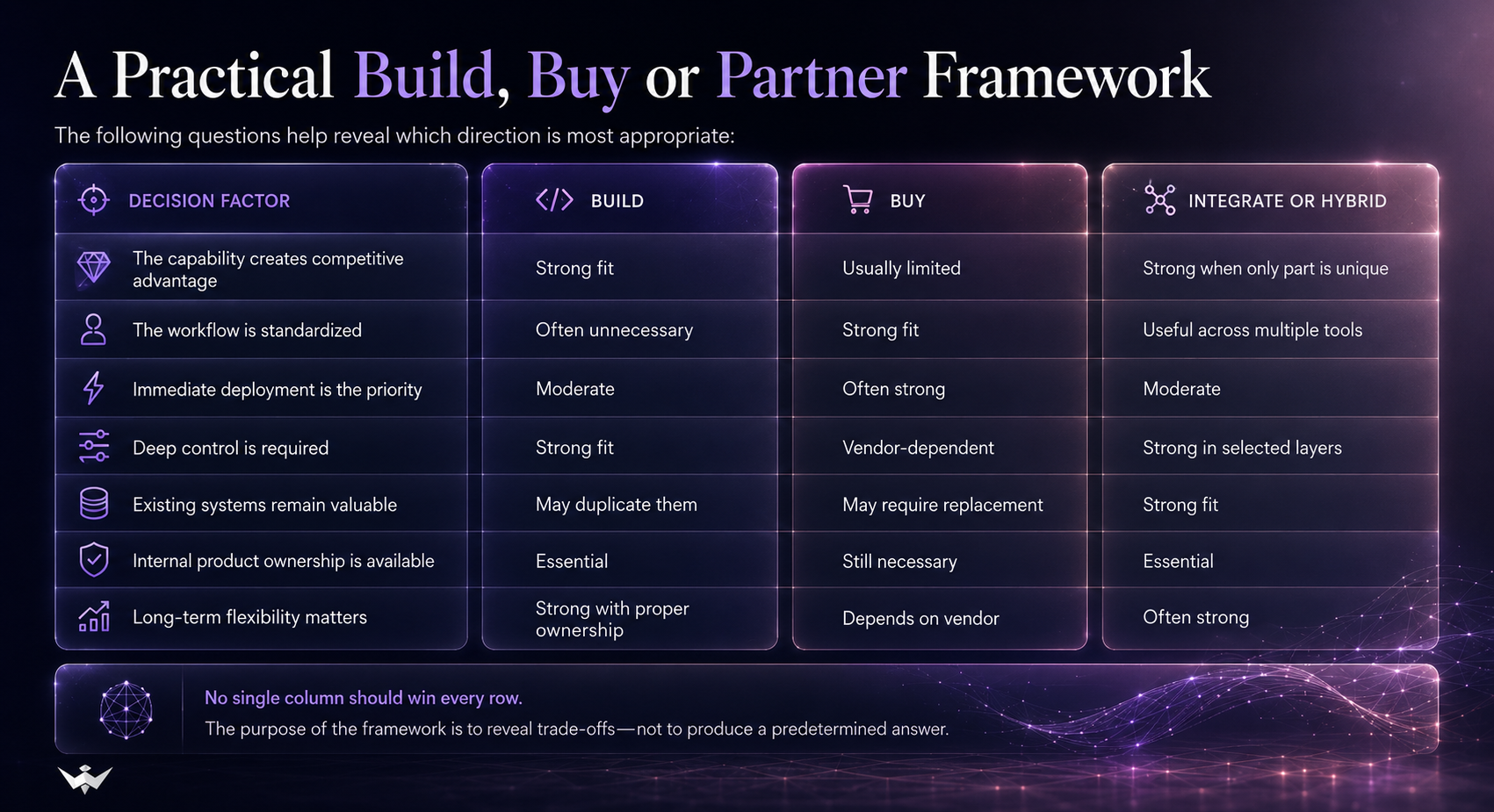
No single column should win every row.
The purpose of the framework is to reveal trade-offs-not to produce a predetermined answer.
Before signing a vendor contract or commissioning a custom platform, decision-makers should be able to answer:
If these questions cannot be answered, the organization is not yet choosing between build and buy.
It is choosing between assumptions.
There is a temptation in technology to believe the most ambitious solution must also be the most valuable.
It is not.
Sometimes the right decision is a carefully selected SaaS platform.
Sometimes it is a custom product that creates an experience no available platform can support.
And often, it is a hybrid architecture: purchased software underneath, custom workflows where the business is distinctive, and integrations that allow the entire environment to operate as one system.
The principle is simple:
Buy what is common. Build what makes the business meaningfully different. Integrate wherever existing systems already perform their job well.
Not everything valuable needs to be built.
But everything important needs to be chosen deliberately.
Before committing to a vendor or a custom build, evaluate the decision against your strategy, workflows, data, integrations, risks, and long-term ownership.

What Formula 1 can teach us about building high-performance software architecture that remains fast, reliable, and efficient when the pressure is on.

The strongest systems are rarely made from extraordinary parts. They become extraordinary through the way those parts are connected.

The real test of an AI system begins when the perfect prompt, curated data, and friendly audience disappear.

Before AI can understand your business, your business has to understand where its knowledge lives.
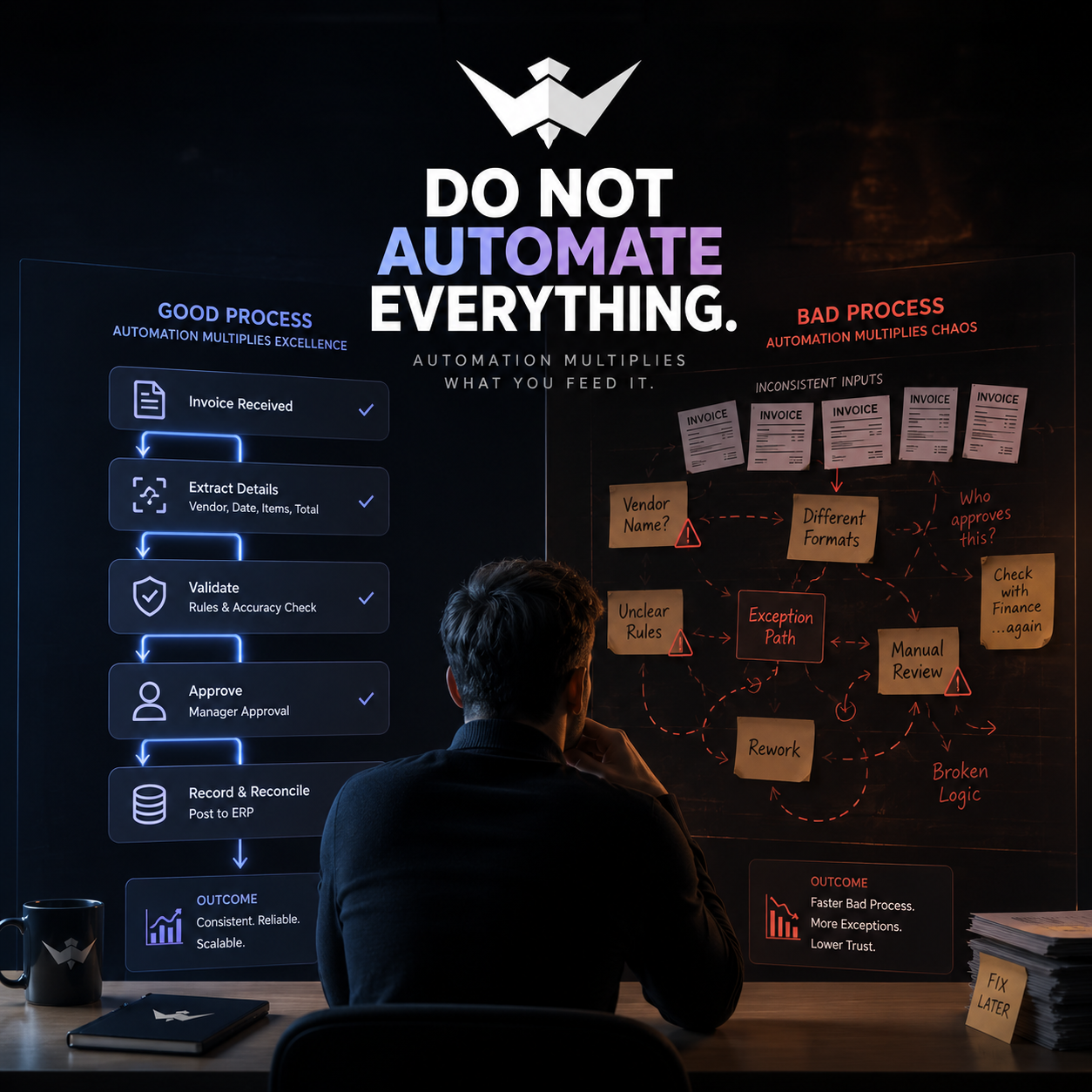
Automation is a multiplier. Before making a process faster, make sure it deserves to be multiplied.
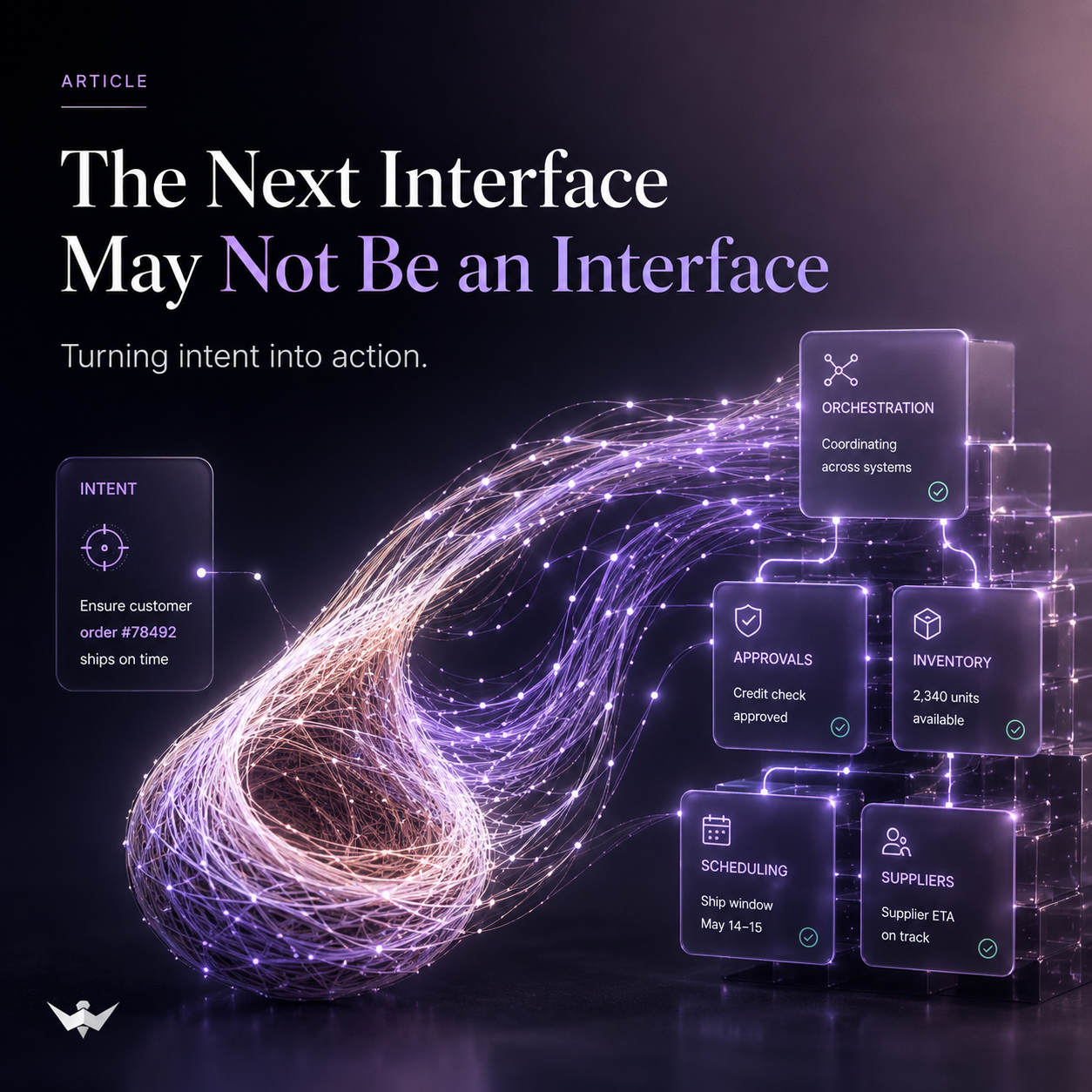
We learned to talk to artificial intelligence. Now we are teaching it how to move work forward.
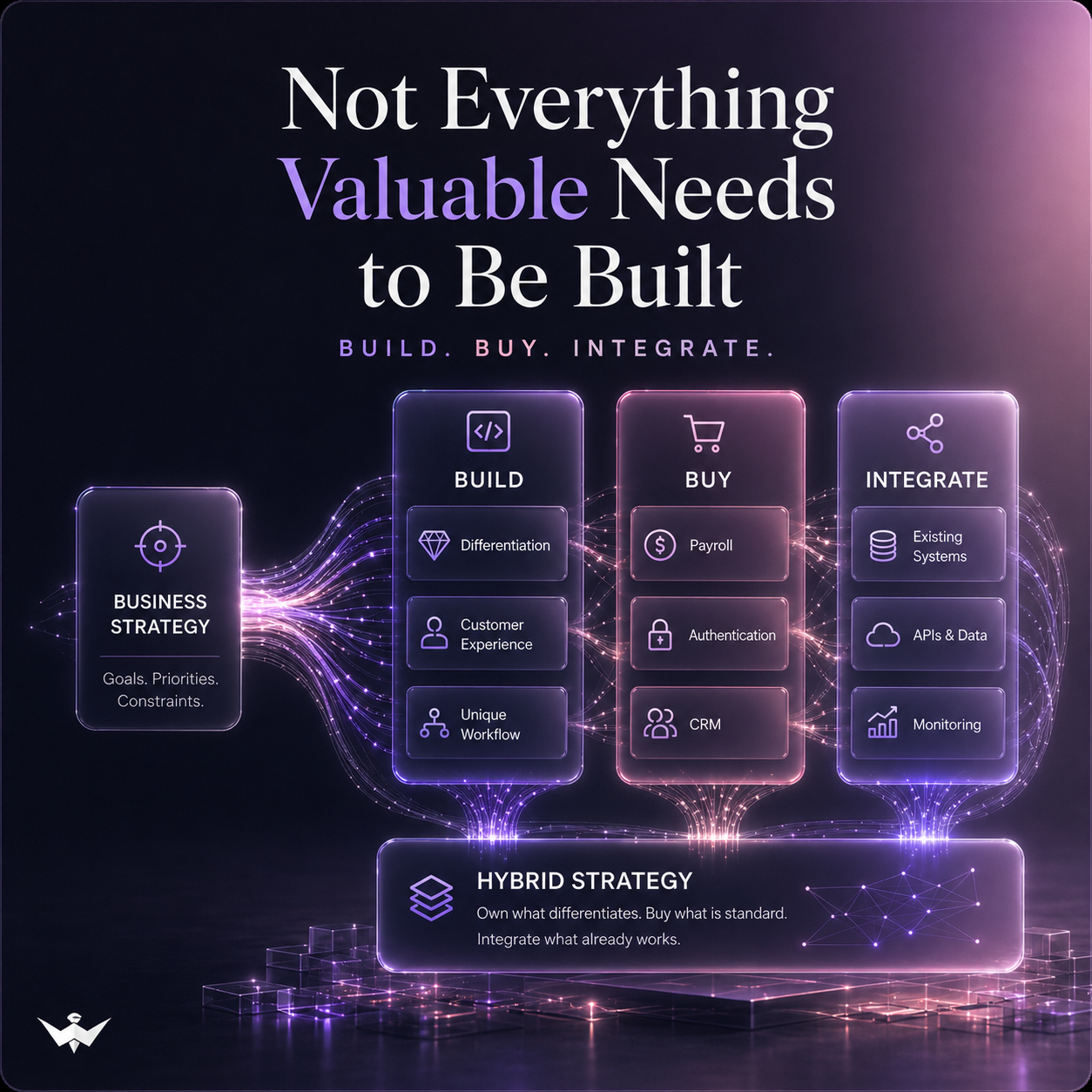
The smartest software strategy is not choosing between build and buy-it is knowing what your business should own, what it should borrow, and what it should connect.