
Championships Are Won in the Garage
Display None Text
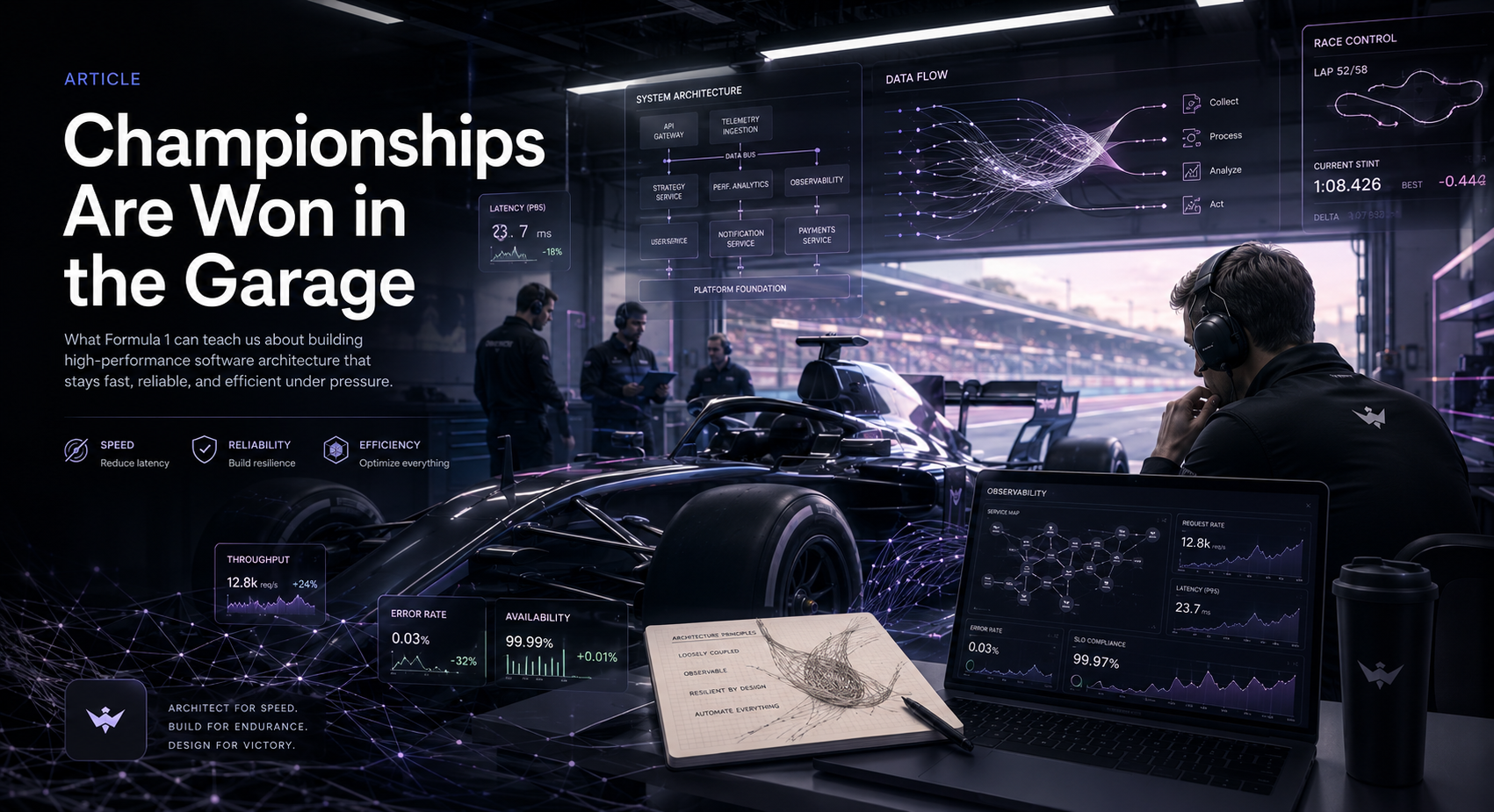
What Formula 1 can teach us about building high-performance software architecture that remains fast, reliable, and efficient when the pressure is on.

What Formula 1 can teach us about building high-performance software architecture that remains fast, reliable, and efficient when the pressure is on.



A few hours before a Formula 1 race, the circuit feels strangely divided.
Outside the garage, everything is spectacle. Grandstands fill. Cameras move into position. Fans gather around the paddock, hoping to catch a glimpse of a driver. The race has not yet started, but the story is already being framed around the person who will eventually sit behind the wheel.
Inside the garage, the mood is different.
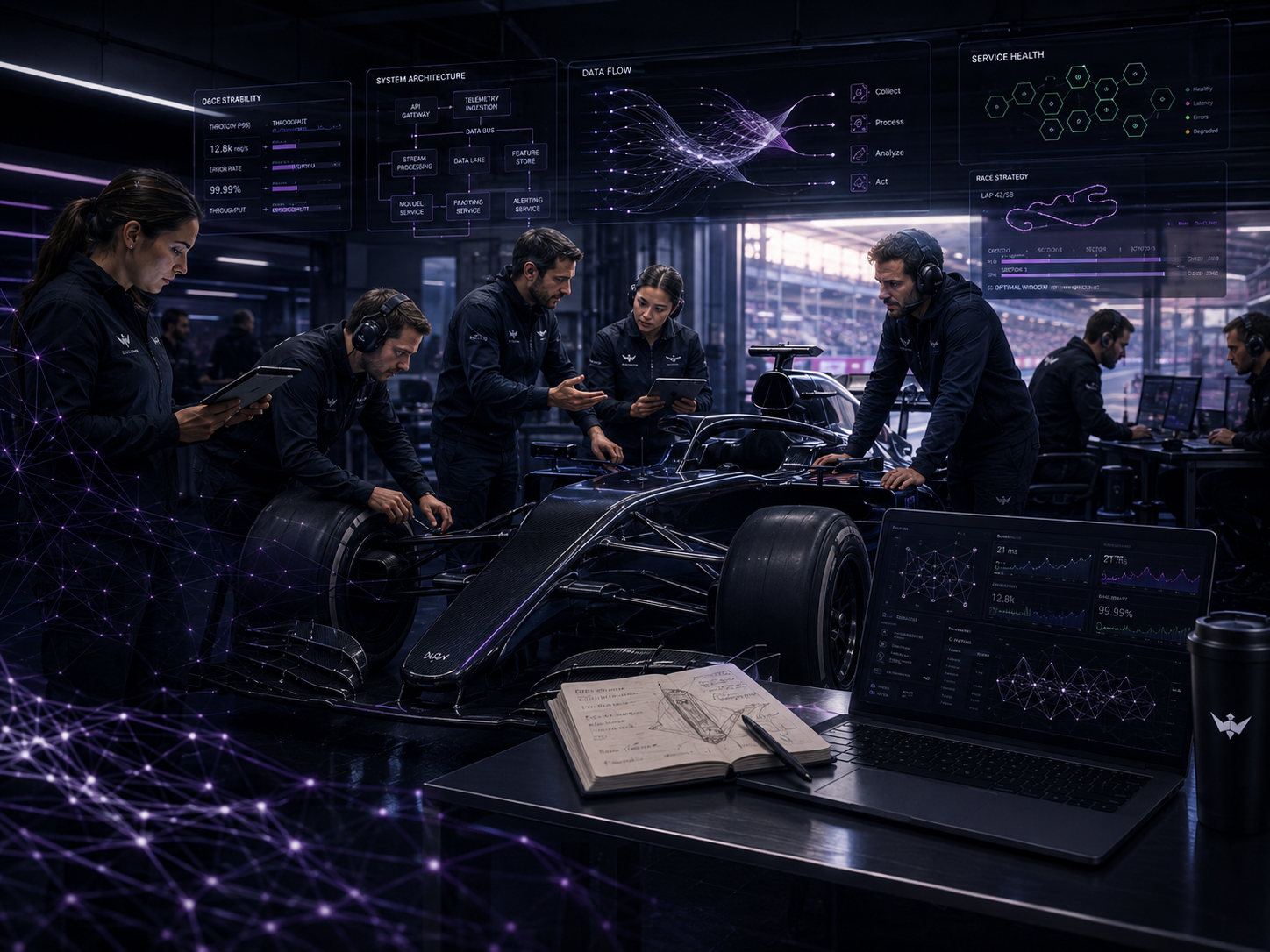
Engineers study live data. Mechanics inspect components that appear perfectly fine. Strategists revisit scenarios that may never happen. Software teams review telemetry. Tyres, temperatures, energy systems, weather, track conditions, and hundreds of small variables are examined again.
Most of this work will never make the broadcast.
If the car performs well, it will look effortless. If it wins, the cameras will follow the driver to the podium. Very few people will think about the decisions made inside the garage hours, days, and months before the lights went out.
That is what makes Formula 1 such a useful way to think about software.
Customers also experience only the visible part of a digital platform. They open a dashboard, complete a payment, request a report, compare a product, or ask an AI assistant a question. To them, the experience is simple: they do something, and the system responds.
But beneath that moment sits an entire garage.
There are APIs moving information between systems, databases searching through years of records, security controls checking permissions, cloud infrastructure absorbing demand, monitoring tools watching for unusual behaviour, and deployment pipelines delivering new changes without interrupting the people already using the product.
When all of this works, nobody notices.
That is the point.
High-performance software architecture is the discipline of making complex systems feel simple. It is not only about speed. It is about building software that remains fast, reliable, scalable, observable, and economically sensible under real conditions.
And like a Formula 1 car, that performance is never created by one component alone.
When a Formula 1 car is slow, the team does not look for a single “make car faster” setting.
The problem may be aerodynamic. It may be mechanical. It may come from tyre behaviour, energy deployment, setup, weather, or the relationship between several of those factors. A car with an exceptional engine can still lose time through corners. A car with excellent race pace can still be undone by poor reliability or weak strategy.
Performance emerges from the complete system.
Software works in exactly the same way, although many teams still try to optimize it one piece at a time.
When an application slows down, the first response is often to add more servers. When growth creates complexity, the answer becomes microservices. When users complain about the experience, attention turns to the interface.
Those changes may help, but they may also hide the real issue.
A single user request can travel through a content delivery network, an authentication service, an API gateway, several application services, a database, a cache, a queue, and one or more external providers before anything appears on the screen.
Every handoff introduces time. Every dependency introduces risk. Every unnecessary layer introduces cost.
This is why high-performance software architecture cannot be reduced to cleaner code or more powerful infrastructure. A platform can contain excellent individual technologies and still perform badly because those technologies do not work well together.
The architecture determines how the parts behave as a whole.
For a business, this distinction matters because customers do not experience components. They experience journeys.
They do not care that the database answered quickly if the full report still took eight seconds to generate. They do not care that one service remained online if the payment flow failed halfway through. They do not care that the application passed a load test if it slows down every Monday morning when real demand arrives.
The right question is not, “Is this component fast?”
It is, “Can the customer complete the task that brought them here quickly and reliably?”
That is a much harder question. It is also the one that matters.
There is a reason Formula 1 teams speak about race pace rather than only qualifying pace.
A car can be extraordinarily fast for one lap and still fail to win. It may overheat. It may degrade its tyres too quickly. A component may fail. Its performance may disappear when conditions change.
The winner has to remain competitive for the entire race.
Software faces the same test.
A platform may look impressive during a demonstration and still fail in production. It may respond instantly with sample data but struggle after several years of information have accumulated. It may work perfectly for hundreds of users and become unstable when thousands arrive together.
Speed without reliability is not high performance. It is a good moment.
Reliable software systems are built to maintain control when conditions stop being ideal. That means considering traffic spikes, failed dependencies, overloaded databases, interrupted deployments, duplicated requests, delayed data, and services that become unavailable without warning.
At Wewer, this thinking shaped the work behind Global Dollar Analytics, where the platform was built around a target of 99.9% uptime.
That number did not come from one technical decision. It came from many decisions working together: how the platform was hosted, how services were monitored, how releases were managed, how failures were detected, and how the system was expected to recover.
This is where architecture becomes less glamorous and more valuable.
The strongest teams ask difficult questions early:
These questions are not signs of pessimism. They are signs of maturity.
A reliable system is not one that assumes nothing will go wrong. It is one that already knows how it should behave when something does.
During a race, a Formula 1 car produces a continuous stream of information.
The team watches temperatures, pressures, braking behaviour, energy use, component conditions, tyre performance, and countless other signals. Engineers are not simply observing whether the car is moving. They are trying to understand why it is behaving the way it is.
Software needs the same awareness.
This is where software observability becomes essential.
Observability allows teams to understand a system through the information it produces. Metrics can reveal that response times are increasing. Logs can show what happened at a particular moment. Traces can reveal how one request moved through several services and where it became delayed.
Without those signals, diagnosing a complex platform becomes guesswork.
Suppose a customer reports that a dashboard has become slow. The server may be overloaded. A database query may have changed. An external provider may be responding late. A recent release may have introduced an unexpected delay.
Without observability, all four explanations sound plausible.
With observability, the system begins to tell its own story.

The best monitoring systems do more than display infrastructure health. They connect technical behaviour to business actions.
Can users sign in?
Can they complete a payment?
Can they retrieve the information they need?
Can an AI assistant return a useful response within an acceptable time?
Is the data fresh enough to support a decision?
A platform can have healthy servers while customers are unable to complete the one task that matters. That is why observability should be designed around user journeys, not only machines.
The purpose is not to create more dashboards.
It is to reduce the distance between a problem and the truth.
A Formula 1 pit stop lasts only a few seconds, but it is the result of hundreds of hours of preparation.
Each person knows where to stand. Every tool has a purpose. Movements are practiced until they become predictable. When the car arrives, the team does not pause to discuss the process.
The speed comes from removing uncertainty.
Software deployments should feel the same way.
Yet in many organizations, releases still depend on manual commands, private documents, remembered steps, and one person who has performed the process often enough to know what might go wrong.
That can survive while the platform is small.
As the business grows, it becomes dangerous.
A dependable deployment process should be repeatable. Code is reviewed. Tests run automatically. Security checks are completed. A release is introduced gradually. Health signals are monitored. The change is either promoted or rolled back.
The exact process will vary, but the principle does not.
Deployment should not depend on improvisation.
Smaller, predictable releases are easier to inspect and easier to reverse. Fewer changes are introduced at once. When something breaks, the team has a smaller area to investigate. Recovery becomes faster, and releasing software stops feeling like a high-risk event.
That is the pit crew principle.
The goal is not simply to deploy faster. It is to make change safer.
A slow digital experience is rarely caused by one dramatic delay.
It is usually the result of small delays collecting across a system.
A request spends time travelling to the application. Authentication adds more. A service waits for a database. The database calls another service. An external provider responds slowly. The final result is processed and returned to the user.
Each delay may look harmless on its own.
Together, they create friction.
The user waits for a dashboard to load. An employee pauses between steps in an internal workflow. A payment confirmation feels uncertain. An AI assistant leaves the screen blank for too long.
At scale, milliseconds become minutes. Minutes become lost productivity, abandoned journeys, higher infrastructure costs, and lower trust.
This is why low-latency system design should focus on the complete experience rather than isolated benchmarks.
Sometimes the solution is caching frequently requested information. Sometimes it is a better database index, a smaller payload, fewer network calls, or moving non-essential work into the background.
There is no universal performance trick.
The process is more disciplined than that:
Formula 1 teams do not make cars faster through instinct alone. They combine experience with evidence.
Software teams should do the same.
A platform does not need millions of users to become complex.
Sometimes complexity comes from the number of systems it must connect.
For MetaworldX, Wewer worked across an environment involving more than 100 APIs and over 75 data sources.
Each integration had its own rules: authentication, data formats, rate limits, update schedules, failure behaviour, and ownership. The real challenge was not simply connecting one system to another. It was preventing the behaviour of each external system from spreading across the entire platform.
One slow data source should not freeze the application.
One malformed response should not corrupt a pipeline.
One provider changing its API should not force the whole business to redesign around it.
Good enterprise platform architecture absorbs these differences through clear boundaries, validation, queues, timeouts, isolation, and observability.
To the customer, the experience may still look simple.
That is what good architecture does. It carries the complexity so the user does not have to.
There is another lesson Formula 1 teaches particularly well: performance is always constrained.
A team cannot simply add unlimited power. Every decision affects weight, energy, reliability, tyre life, and the rest of the car. An advantage in one area may create a weakness somewhere else.
Cloud infrastructure works the same way.
It is often possible to improve performance by spending more money. More compute, more storage, and more capacity can hide architectural problems for a while.
But a system that achieves speed through unchecked spending is not truly high-performing. It is expensive.
The better question is: how much useful performance is the business receiving for every dollar it spends?
That requires examining where resources sit idle, where calculations are repeated, where data moves unnecessarily, and where complexity has turned into an operating cost.
In one Wewer engagement, changes to the architecture and cloud infrastructure reduced costs by approximately 75%.
The platform did not become less capable. The waste around the capability was removed.
This is the software equivalent of efficiency in racing. The goal is not merely to produce power. It is to use resources intelligently enough to sustain performance over time.
Most companies do not need more metrics. They need a smaller number of metrics that reveal whether the platform is helping or hurting the business.
A useful performance view should answer five questions:
The purpose of these measurements is not to create an impressive wall of charts.
It is to identify weaknesses before customers discover them.
Most customers will never ask how your database is indexed.
They will not inspect your deployment pipeline. They will not know that a queue absorbed a sudden spike in traffic or that an automated rollback stopped a defective release from reaching them.
They will simply experience a product that works.
It will feel fast without appearing hurried. It will remain available without drawing attention to its reliability. It will recover from problems the customer may never know occurred.
That kind of simplicity is not accidental.
It is built through careful decisions made beneath the surface.
Formula 1 makes this visible in a way few other industries do. The driver receives the trophy, but the result belongs to the entire system: the mechanics, strategists, software teams, data, processes, tools, and countless decisions made long before the audience began watching.
Software is no different.
The interface may receive the attention. The visible product may earn the applause.
But the performance that businesses depend on is built somewhere deeper.
Championships are won in the garage.

What Formula 1 can teach us about building high-performance software architecture that remains fast, reliable, and efficient when the pressure is on.
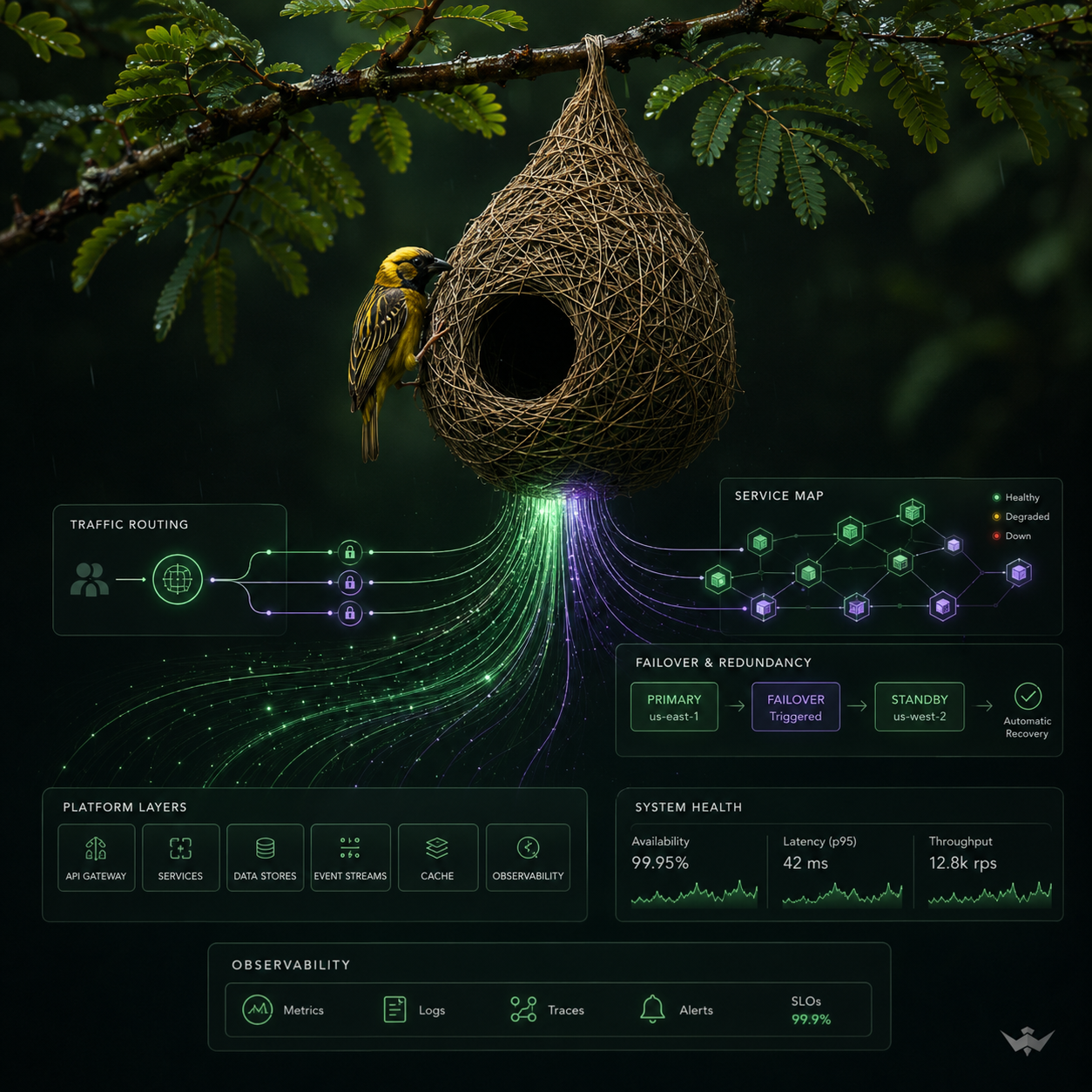
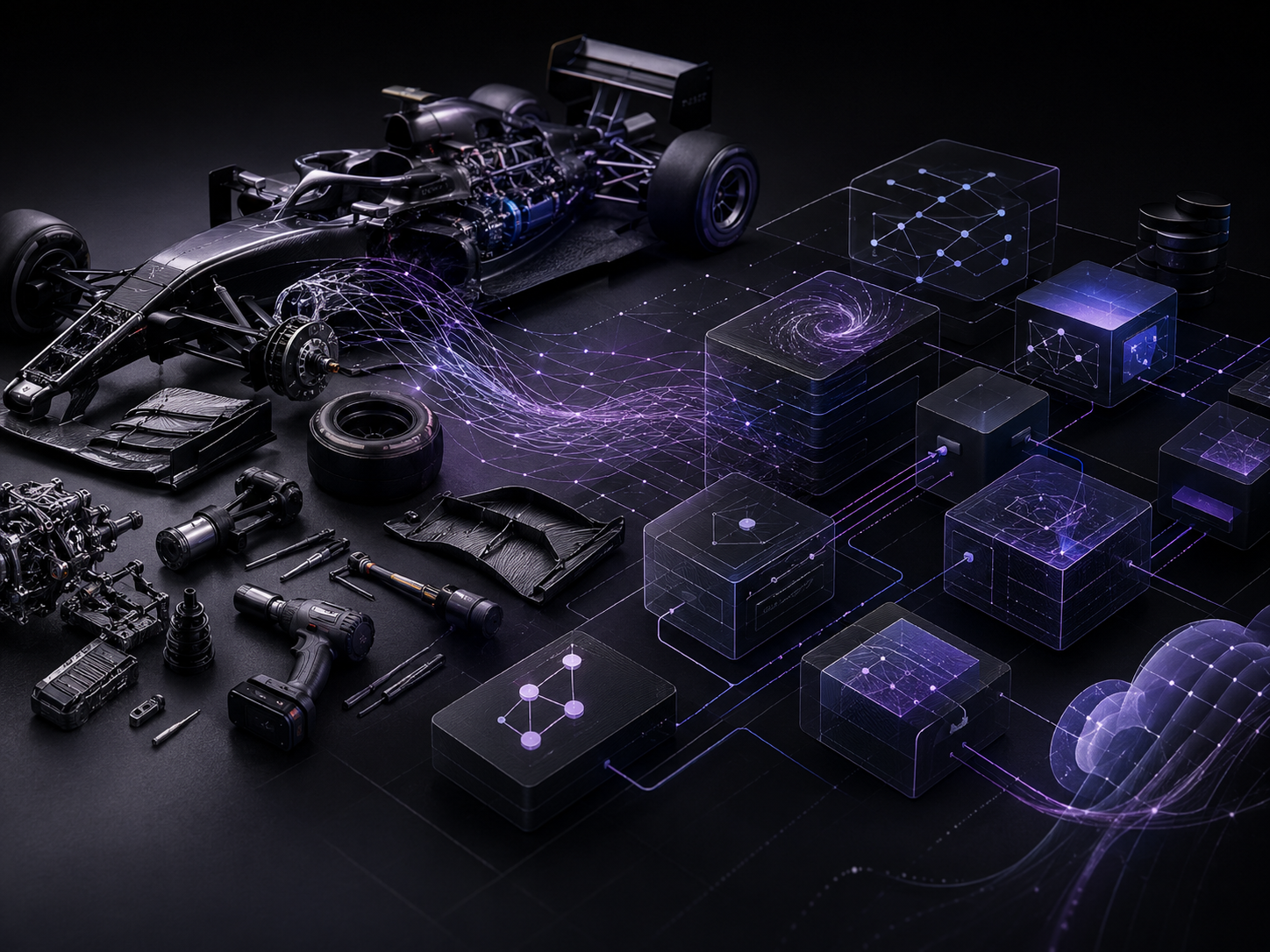
The strongest systems are rarely made from extraordinary parts. They become extraordinary through the way those parts are connected.

The real test of an AI system begins when the perfect prompt, curated data, and friendly audience disappear.
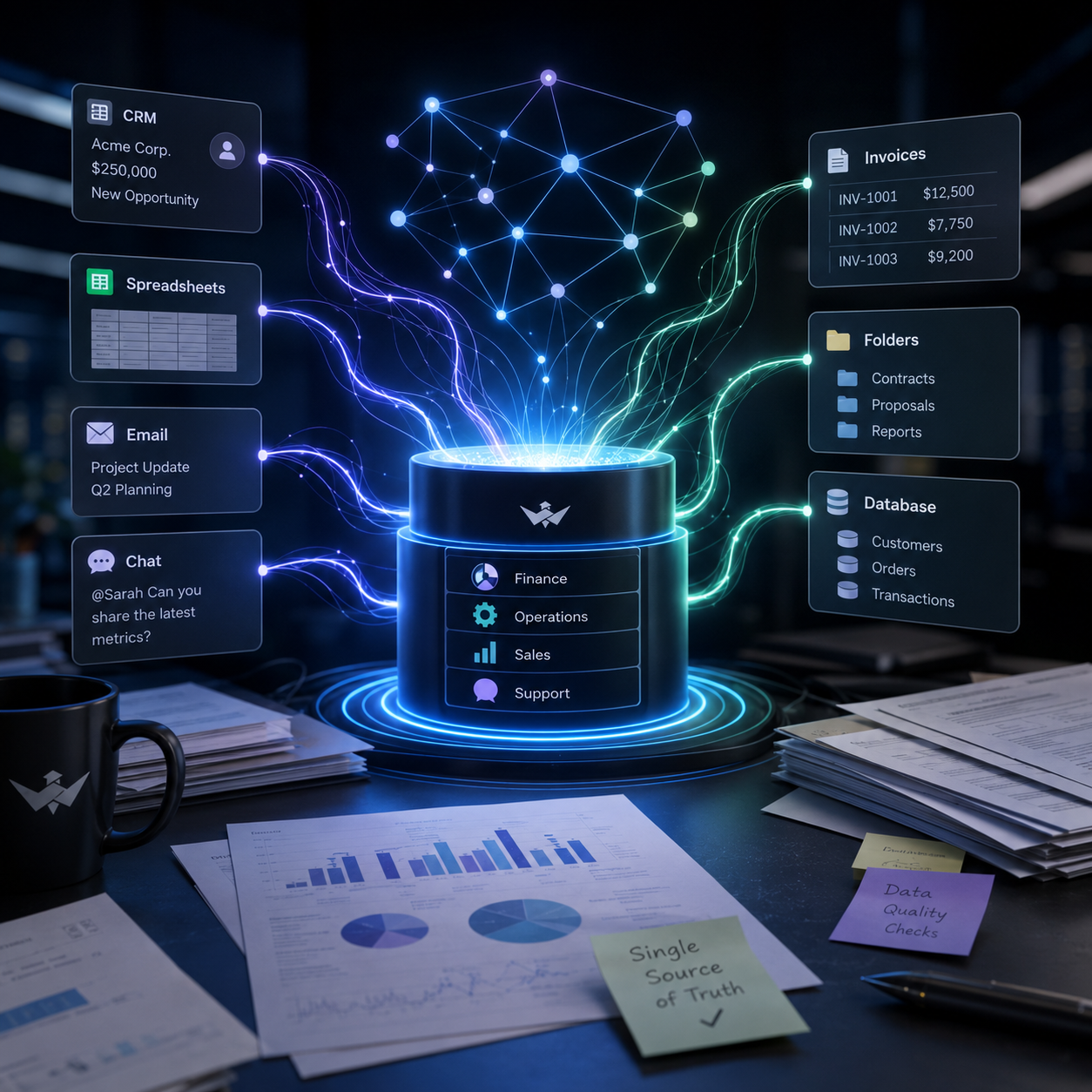
Before AI can understand your business, your business has to understand where its knowledge lives.
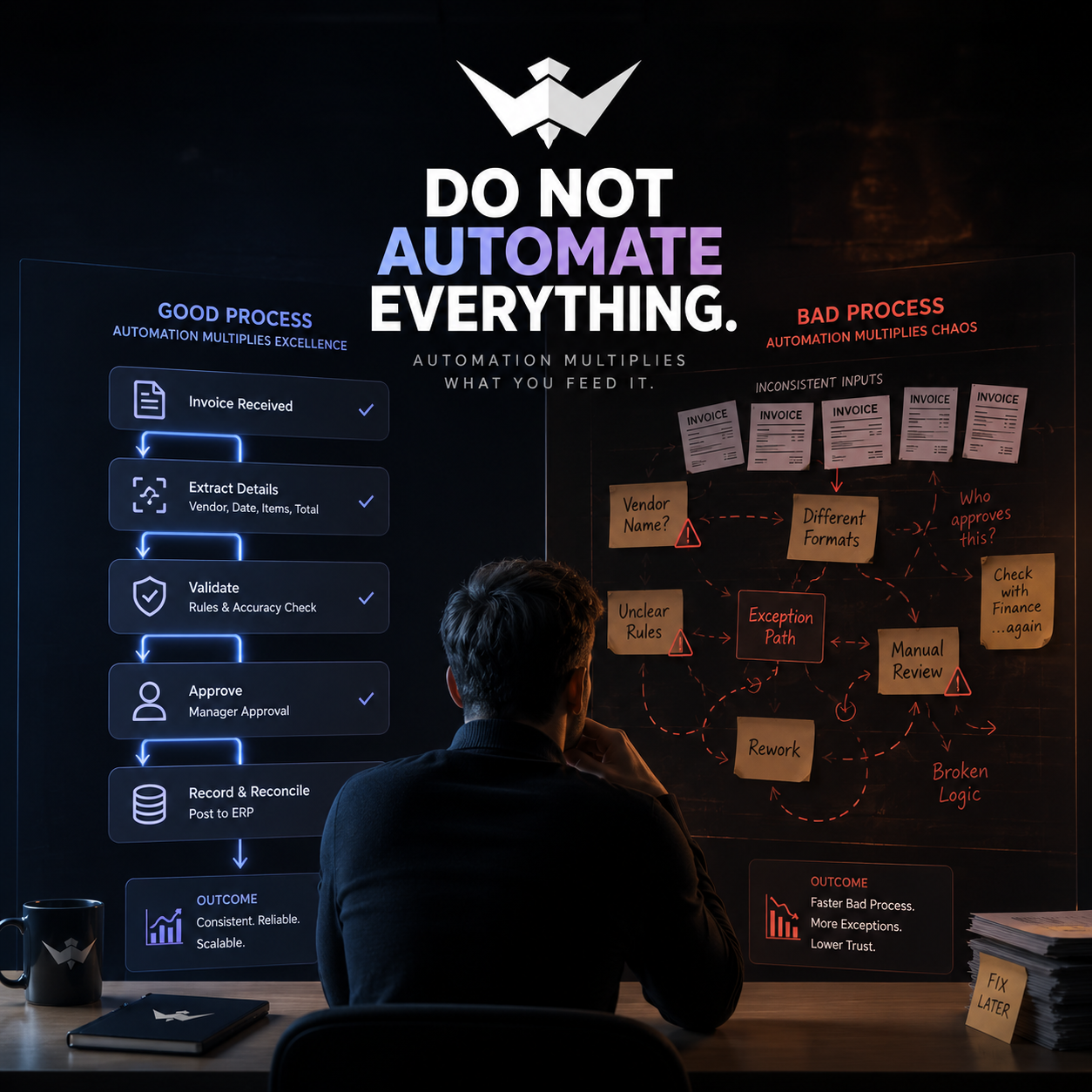
Automation is a multiplier. Before making a process faster, make sure it deserves to be multiplied.

We learned to talk to artificial intelligence. Now we are teaching it how to move work forward.

The smartest software strategy is not choosing between build and buy-it is knowing what your business should own, what it should borrow, and what it should connect.